

A product launch is one of the highest-stakes moments in a business’s marketing calendar. Months of development, planning, and investment often come down to a single event, or a short launch window, where the goal is to generate excitement, communicate value clearly, and convert attention into real interest and sales. In that high-pressure moment, signage plays a far bigger role than most businesses initially realize.
Signage at a product launch isn’t just decoration. It’s often the first thing attendees see when they arrive, the backdrop for every photo shared on social media afterward, the tool that explains what’s new and why it matters, and the visual cue that ties the entire event together into a cohesive brand experience. A launch with brilliant product features but weak, inconsistent, or confusing signage can fall flat. A launch with modest resources but smart, well-executed signage can feel polished, exciting, and memorable.
This guide covers everything a business needs to think through when planning signage for a product launch — from the weeks of anticipation before the event, through the day itself, to the afterglow that keeps the launch’s impact alive on social media and in customer memory.
A product launch typically has a narrow window to make its impression. Unlike ongoing retail signage, which customers encounter repeatedly over months or years, launch signage usually gets one shot, a single event, a few hours, sometimes just one day, to communicate everything a business wants people to feel and understand about the new product.
This compressed timeline makes signage disproportionately important. Several factors explain why:
Before diving into specific signage types, it’s worth clarifying what kind of launch event you’re actually planning, since signage needs vary significantly across formats.
*In-store or retail launch. A new product debuting inside an existing retail location needs signage that integrates with the store’s existing environment while still clearly standing out as something new and noteworthy.
*Standalone launch event. A dedicated event — at a rented venue, hotel ballroom, or outdoor space — offers more creative freedom but requires building an entire branded environment from scratch, since there’s no existing storefront or interior to work with.
*Trade show or exhibition launch. Launching within a larger trade show or industry exhibition means competing for attention among many other exhibitors, requiring particularly bold, high-visibility signage to stand out.
*Pop-up or temporary activation. A short-term pop-up launch, often in a mall, event space, or high-traffic public area, needs signage that’s portable, quick to set up, and able to capture attention from passersby who weren’t necessarily planning to stop.
*Virtual or hybrid launch. Even virtual-first launches increasingly include physical signage components — branded backdrops for livestream hosts, signage at small in-person viewing parties, or promotional materials distributed to media and influencers.
Each format calls for a different signage strategy, and businesses should map out their specific launch type early in the planning process, since it shapes nearly every subsequent decision about materials, placement, and budget.
Many businesses focus signage planning entirely on the day of the event itself, overlooking the valuable window of weeks or even months beforehand when anticipation can be built strategically.
*Teaser signage in-store or on-site. For businesses with an existing physical location, teaser signage , a covered display, a “something big is coming” message, or a simple countdown graphic placed weeks ahead of launch day builds curiosity among regular customers.
*Countdown displays. Digital screens or printed countdown signage showing “X days until launch” creates a sense of urgency and keeps the upcoming product top of mind for anyone visiting the location regularly.
*Window and exterior teasers. For retail launches, exterior window signage hinting at the upcoming product without necessarily revealing full details draws attention from foot traffic and builds intrigue well before the actual reveal.
*Save-the-date signage for event-based launches. For businesses hosting a dedicated launch event, on-site signage (if there’s an existing location) or digital signage at related events can promote the launch date to an engaged audience ahead of time.
Pre-launch signage works best when it reveals just enough to generate curiosity without giving away the full product details, striking a balance that keeps people intrigued rather than fully informed.
Once launch day arrives, entrance and exterior signage becomes the first physical touchpoint attendees encounter, and it needs to immediately communicate both excitement and clear direction.
*Branded entrance arch or banner. A prominent, well-lit entrance marker, whether a step-and-repeat banner, an inflatable arch, or a large format vinyl banner, immediately signals “you’ve arrived at the right place” and sets an energetic tone.
*Clear event signage for wayfinding. For larger venues or multi-entrance buildings, directional signage guiding attendees from parking areas or building entrances to the actual launch space prevents confusion and keeps the event feeling organized from the first moment.
*Weather considerations for outdoor entrance signage. For outdoor or semi-outdoor launch entrances, durable, weather-resistant materials matter significantly, particularly in regions prone to rain or strong sun exposure, to avoid signage that looks damaged or faded by the time guests arrive.
*illuminated signage for evening launches. Launch events held in the evening or extending into nighttime hours benefit significantly from illuminated or backlit entrance signage, ensuring visibility and impact doesn’t fade as natural light does.
Once inside, interior signage shapes how attendees move through and experience the event, balancing functional wayfinding with brand storytelling.
*Registration and check-in signage. Clear signage directing attendees to registration or check-in areas reduces early confusion and keeps the event’s opening moments feeling smooth and well-managed.
*Product showcase signage. Signage accompanying the actual product display — feature callouts, pricing information, or key differentiators — helps attendees absorb important details even when they haven’t yet spoken directly with staff.
*Directional signage for multi-zone events. Larger launches with multiple areas (demo zones, photo areas, refreshment stations, media interview areas) benefit from clear directional signage helping attendees navigate confidently rather than wandering uncertainly.
*Stage and podium branding. For launches including a formal presentation or keynote moment, branded stage backdrops, podium signage, and presentation screen graphics reinforce identity during the event’s most attention-focused segment.
*Sponsor or partner signage. For launches involving co-branding or sponsor partnerships, clearly organized signage acknowledging these relationships maintains professionalism and fulfills partnership commitments.
Among all signage elements at a product launch, the photo backdrop deserves particular attention, since it often generates the most lasting value relative to its cost.
*Why photo backdrops matter so much. Nearly every attendee at a launch event will take photos, and many will specifically seek out a designated photo spot. A well-designed backdrop ensures that when those photos are shared on social media, they carry clear, consistent branding rather than a generic or unbranded background.
*Design principles for effective backdrops. An effective backdrop typically repeats the brand logo and key visual elements in a pattern (similar to a step-and-repeat banner), ensuring the brand remains visible and identifiable regardless of where someone stands or how the photo is cropped.
*Lighting considerations. Backdrops should be positioned with adequate lighting in mind, whether that means natural light from windows, dedicated event lighting, or ring lights for better selfie-taking, since poor lighting undermines even the best-designed backdrop.
*Incorporating interactive or 3D elements. Increasingly, brands incorporate dimensional elements — a product replica, branded props, or an interactive feature — into photo backdrop areas, encouraging more creative, shareable photos beyond a simple flat background.
*Placement strategy. Positioning the backdrop in a high-traffic but not bottleneck-causing area ensures steady usage throughout the event without creating congestion near entrances or key demo areas.
Modern product launches increasingly incorporate digital displays and interactive signage alongside traditional printed materials, adding dynamic content and engagement opportunities.
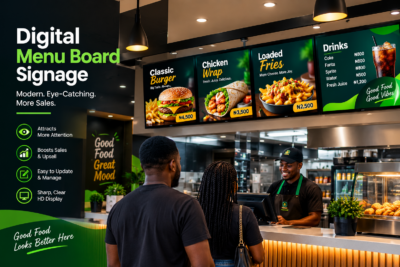
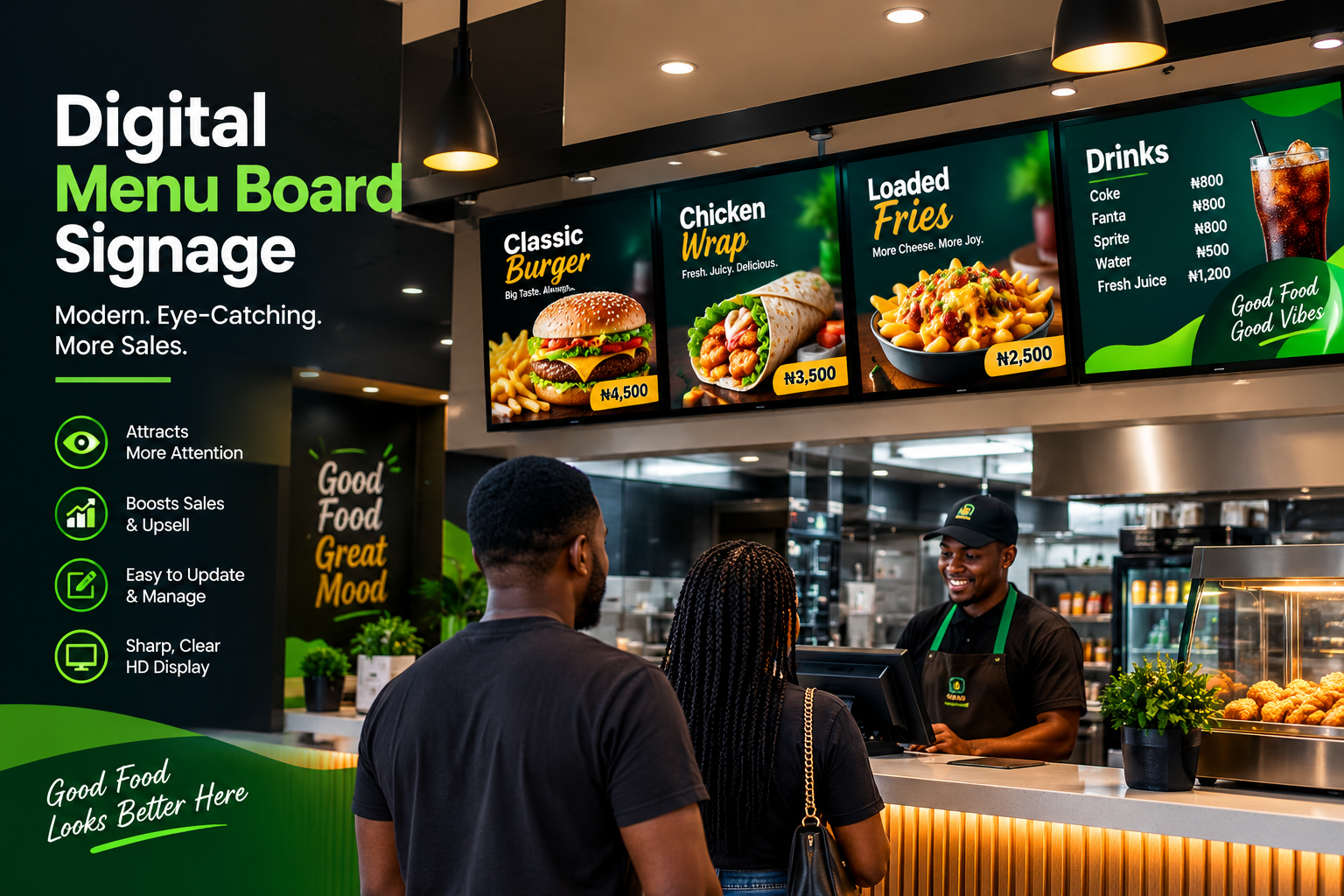
*Looping product videos and feature highlights. Digital screens playing product demonstration videos or feature highlight reels on loop allow attendees to absorb detailed information passively, without requiring constant staff explanation.
*Live social media walls. Displaying a live feed of event-related social media posts (using a designated event hashtag) on a digital screen encourages attendees to post content, knowing it might be featured in real time.
*Interactive product configurators or kiosks. For certain product categories, interactive touchscreen displays allowing attendees to explore product options, colors, or configurations firsthand add a hands-on engagement layer beyond static signage.
*Digital countdown and schedule displays. For launches with a formal program (keynote times, demo sessions, giveaways), digital schedule displays help attendees plan their time at the event without needing to repeatedly ask staff.
*QR codes bridging physical and digital. Incorporating QR codes into printed signage — linking to product pages, registration forms, or exclusive launch-day offers — connects the physical event experience directly to measurable digital actions.
Beyond pure functionality, product launch signage offers a valuable opportunity to tell a cohesive brand story, rather than simply listing product features.
*Establishing a consistent visual theme. Signage across every zone of the event — entrance, product display, stage, backdrop — should share consistent colors, typography, and design language, reinforcing a single cohesive brand experience rather than feeling like disconnected individual signs.
*Highlighting the “why” behind the product. Rather than only listing specs and features, signage copy that briefly communicates the problem the product solves or the inspiration behind its creation adds emotional resonance that pure feature lists can’t achieve.
*Using signage to build a narrative journey. For larger launch events, sequencing signage so attendees move through a loose narrative — from problem, to solution, to product reveal, to call-to-action — creates a more memorable experience than scattered, disconnected messaging.
*Incorporating customer or tester testimonials. Where available, signage featuring early tester quotes or anticipated customer reactions adds social proof and builds credibility before the product has even reached general availability.
Product launch signage budgets vary enormously based on event scale, but a few principles help businesses allocate resources effectively regardless of overall budget size.
*Prioritize high-visibility, high-photo-potential signage first. Entrance signage and the photo backdrop typically deliver the most value relative to cost, since they shape first impressions and generate ongoing social media value well after the event ends.
*Consider reusability for recurring launch events. Businesses that launch new products regularly should invest in modular signage systems — adjustable backdrops, reusable frames with swappable graphics — that can be refreshed for each new launch without requiring entirely new signage from scratch every time.
*Balance printed and digital investments. While digital signage offers flexibility and dynamic content, printed signage remains more cost-effective for single-use or infrequent launch events, making it worth evaluating which format best fits your launch frequency and budget.
*Factor in setup, breakdown, and transport costs. Beyond the signage itself, budget for delivery, installation, and removal, particularly for larger venue-based launches requiring professional installation teams.
*Build in a contingency buffer. As with any event-based project, unexpected costs — last-minute design changes, venue-specific requirements, or weather-related adjustments for outdoor events — make a contingency allowance of around 10-15% a sensible planning standard.
Coordinating signage production and installation around a fixed launch date requires careful timeline planning, since delays in signage can directly jeopardize the event date itself.
*8-10 weeks before launch: Finalize overall launch concept, venue, and format, which determines the full scope of signage needed.
*6-8 weeks before launch: Begin signage design work, including backdrop graphics, entrance signage, and interior wayfinding, allowing time for revisions.
*4-6 weeks before launch: Finalize all signage designs and move into production/fabrication.
*2-4 weeks before launch: Begin any pre-launch teaser signage at existing physical locations, if applicable.
* 1-2 weeks before launch: Confirm all signage has been fabricated and quality-checked, and finalize installation logistics with the venue or signage provider.
*1-2 days before launch: Complete installation of all entrance, interior, and backdrop signage, allowing time for a final walkthrough and adjustments.
*Launch day: Conduct a final signage check before doors open, ensuring everything is positioned correctly, properly lit, and free of any damage from setup.
Businesses planning larger, multi-location, or particularly elaborate launch signage should extend this timeline accordingly, since complex fabrication (custom structures, large-format digital displays) often requires longer production lead times.
Even well-designed signage can underperform if logistics aren’t carefully managed on the day itself.
*Arrive early for final setup and adjustments. Building in buffer time before doors open allows for last-minute adjustments — fixing a crooked banner, repositioning lighting, or addressing any damage that occurred during transport or setup.
*Assign clear ownership for signage-related issues. Designating a specific team member responsible for monitoring signage condition throughout the event (checking for dislodged banners, dead batteries on digital displays, or worn printed materials) ensures issues get addressed quickly rather than persisting for hours.
*Plan for signage removal and breakdown. Just as setup requires planning, breakdown logistics who removes signage, how it’s transported, and where reusable elements are stored for future events should be organized in advance to avoid a chaotic end to the event.
**Have backup materials on hand.** For critical signage elements like the photo backdrop or entrance banner, having a backup or repair kit (extra zip ties, tape, a spare printed panel) prevents a single damaged element from undermining the entire visual experience.
Even well-funded, carefully planned launches can fall short due to a few recurring signage mistakes.
*Overloading signage with too much text. Attendees moving through an event rarely stop to read lengthy paragraphs; signage copy should be concise, scannable, and focused on one clear message per sign.
*Neglecting lighting for evening or indoor events. Beautifully designed signage loses much of its impact if poorly lit, particularly for evening launches or venues with inconsistent interior lighting.
*Underestimating photo backdrop demand. Placing the backdrop in too small or too out-of-the-way a location often creates bottlenecks or discourages attendees from using it altogether, undermining one of the most valuable signage investments at the event.
*Inconsistent branding across signage elements. Mixing design styles, colors, or logo versions across different signage pieces creates a disjointed, less professional impression, even when each individual piece looks good in isolation.
*Failing to plan for outdoor weather risk. For any outdoor signage component, not accounting for wind, rain, or sun exposure can result in damaged or unusable signage exactly when it’s needed most.
*Skipping a final walkthrough before doors open. Rushing straight from setup into the event itself, without a final check of every signage element, risks letting avoidable issues (crooked banners, visible wiring, incorrect pricing) go unnoticed until attendees point them out.
While harder to isolate from the broader success of a launch event, several indicators help assess whether signage specifically contributed to a strong outcome.
*Social media mentions and shared photos. Tracking how many attendees shared photos featuring the branded backdrop or event signage, and how far that content spread, offers a direct measure of signage-driven visibility beyond the event itself.
*QR code scan data. If QR codes were incorporated into signage, scan analytics reveal how many attendees engaged with digital calls-to-action directly prompted by physical signage.
*Attendee feedback on event experience. Post-event surveys or informal feedback mentioning the event’s visual presentation, organization, or “wow factor” often reflect signage quality, even when signage isn’t explicitly named.
*Staff observations on wayfinding and confusion. Feedback from event staff about how smoothly attendees navigated the space, or how many directional questions they fielded, indicates whether wayfinding signage functioned as intended.
*Media and press coverage quality. For launches with media attendance, reviewing published photos and coverage reveals whether branded signage (particularly stage and backdrop elements) appeared prominently in resulting press coverage.
To illustrate how these principles come together, consider a hypothetical mid-sized consumer product launch — a new beverage brand launching at a dedicated event space with roughly 150-200 attendees expected.
*Eight weeks out, the business finalizes its venue and launch format, deciding on a standalone evening event with a formal product reveal moment and extended mingling/demo period.
*Six weeks out, design work begins on the entrance banner, interior wayfinding signage, product display signage, and a branded photo backdrop featuring the new product’s packaging design repeated in a step-and-repeat pattern.
*Four weeks out, teaser signage goes up at the company’s existing retail partners, hinting at the upcoming launch without revealing full product details.
*Two weeks out*, all signage designs are finalized and move into fabrication, including a illuminated entrance sign suited for the evening timing of the event.
*The week of launch, signage is fabricated, quality-checked, and transported to the venue, with installation scheduled for the afternoon before the event.
*On launch day, the team arrives three hours early for full setup, conducts a walkthrough checking lighting, backdrop positioning, and wayfinding clarity, and assigns one team member to monitor signage condition throughout the event.
*After the event, the business tracks social media mentions using the event’s branded hashtag, reviews photos tagged by attendees featuring the backdrop, and analyzes QR code scans from product information signage to gauge interest in specific features highlighted during the launch.
This structured approach, spanning pre-launch anticipation, day-of execution, and post-event measurement — reflects how signage functions as a strategic tool throughout the entire launch process, not just a day-of decoration.
*How far in advance should launch signage be ordered?
For most mid-sized launches, starting the design process 6-8 weeks ahead of the event allows sufficient time for revisions, fabrication, and installation without last-minute rushing.
*Is it worth investing in digital signage for a single launch event?
For one-time events, printed signage is often more cost-effective, though businesses planning multiple launches throughout the year may find digital displays worthwhile given their reusability across different campaigns.
*What’s the single most important piece of signage at a launch event?
While priorities vary by event, the entrance signage and photo backdrop typically deliver the most value — shaping first impressions and generating ongoing social media visibility respectively.
*Can existing signage structures be reused for multiple launches?
Yes, particularly for backdrop frames, banner stands, and modular structures, which can be fitted with new printed graphics for each new launch rather than requiring entirely new structures each time.
*How should outdoor launch signage account for weather?
Choosing weather-resistant materials, securing signage against wind, and having a rain contingency plan (covered areas, quick-removal options) are essential for any outdoor launch component.
While the core principles of launch signage apply broadly, specific industries often have unique priorities worth factoring into the planning process.
*Technology and electronics launches. Tech product launches often benefit from signage that emphasizes specifications and comparisons, since buyers in this category frequently research features in detail. Interactive digital kiosks allowing attendees to explore specs or compare models tend to perform particularly well here, alongside clean, minimalist signage design that mirrors the sleek aesthetic common in tech branding.
*Fashion and apparel launches. Fashion launches typically prioritize atmosphere and visual styling over detailed feature callouts. Signage in this category often leans into large-format lifestyle imagery, mood-setting lighting, and photo-friendly staging that lets the product and styling speak for themselves rather than dense informational signage.
*Food and beverage launches. For food and beverage products, signage often needs to work alongside sampling stations, meaning clear labeling of ingredients, flavors, or variations becomes especially important. Menu-board-style signage near tasting areas helps attendees track what they’ve sampled and decide what to purchase afterward.
*Automotive and big-ticket product launches. Launches for vehicles, appliances, or other large physical products typically require signage that complements rather than competes with the product itself, often using more understated directional and informational signage while letting the product occupy visual center stage.
*Beauty and personal care launches. This category frequently benefits from signage incorporating before-and-after visuals, ingredient call-outs, or demonstration-focused messaging near testing stations, helping attendees understand product benefits quickly in a category where visual results matter significantly.
*B2B and professional services launches. For B2B product or service launches, often held at smaller, more intimate events, signage tends to prioritize credibility markers client logos, data points, or case study highlights over the purely visual, photo-driven signage common in consumer product launches.
Understanding which of these categories your launch most closely resembles helps focus signage design decisions around what will genuinely resonate with your specific audience, rather than applying a generic template regardless of product type.
As more businesses and attendees pay attention to environmental impact, sustainable signage choices have become an increasingly relevant consideration for product launches, particularly for brands where sustainability aligns with their broader positioning.
*Choosing reusable structures over single-use materials. Modular banner stands, reusable backdrop frames, and interchangeable graphic panels reduce waste compared to fully custom, single-use signage structures built for one event only.
*Selecting eco-friendly printing materials. Many signage providers now offer recyclable or biodegradable printing substrates as alternatives to traditional PVC banners, worth requesting specifically if sustainability is a brand priority.
*Planning for signage afterlife. Considering what happens to signage after the event — donation, repurposing smaller elements for future use, or responsible recycling — prevents launch signage from becoming pure landfill waste once the event concludes.
*Digital-first approaches where appropriate. For businesses hosting frequent launch events, shifting toward digital signage and screens, rather than producing new printed materials for every event, reduces cumulative material waste over time even though it requires more upfront investment.
These considerations won’t be the top priority for every launch, but for brands where sustainability is part of their identity or customer expectations, incorporating these choices into signage planning adds authenticity that attendees increasingly notice and appreciate.
Signage for a product launch carries more weight than its physical size might suggest. It shapes first impressions, guides attendees through the experience, extends the event’s impact through social media, and ties together every other element of a carefully planned launch into one cohesive brand moment. Businesses that treat signage as a strategic priority planned early, designed thoughtfully, and executed carefully on the day itself consistently create launch events that feel more polished, more exciting, and more memorable than those that treat signage as an afterthought.
Whether you’re planning an intimate in-store product reveal or a large-scale standalone launch event, investing the time to get entrance signage, wayfinding, product displays, and that all-important photo backdrop right pays dividends well beyond the few hours of the event itself.
A successful product launch demands signage that’s designed, fabricated, and installed flawlessly under real time pressure, and that’s exactly what SignFix Industrial Limited delivers. With over a decade of experience providing signage and branding solutions across Nigeria and beyond, our team understands how to translate a launch concept into entrance banners, branded photo backdrops, interior wayfinding, and stage signage that work together as one cohesive experience. From initial design through fabrication, on-site installation, and day-of support, SignFix manages every detail so your team can focus on the product and your guests, not on signage logistics. Whether you’re launching in-store, at a dedicated event space, or on a trade show floor, SignFix brings the reliability, craftsmanship, and local expertise Nigerian businesses trust to make launch day unforgettable.
Contact Us
📧 support@signfix.ng | info@signfix.ng
📞 Call Us: +234 903 336 6660