
A product launch is one of the most time-sensitive moments in any brand’s growth story. Everything moves fast: marketing campaigns, inventory, staff training, media coverage, customer expectations and, critically, the physical experience customers have when they arrive. This is where signage becomes more than decoration. Done well, signage directs attention, clarifies value, builds trust, and drives action at exactly the moment your audience is deciding whether to engage.
Whether you’re launching a new product in a retail store, at a trade show, in a corporate event hall, or through an outdoor rollout in a busy neighborhood, the right signage strategy ensures your launch feels cohesive, professional, and memorable. Below is a complete guide to building signage for product launches—covering planning, types of signage, design principles, placement, materials, compliance considerations, and practical workflows that help you deliver consistent results.
A launch often includes multiple objectives happening at once:
– Attract attention from people who may not know your brand yet
– Communicate key messages quickly (features, benefits, offers, dates)
– Guide movement (from entrances to booths to counters or demo zones)
– Increase conversion (calls-to-action, QR codes, “shop now” prompts)
– Strengthen brand credibility through consistent visual identity
In many launch environments, customers make micro-decisions within seconds. If your signage is unclear, poorly placed, or visually inconsistent, your audience may miss the information you worked hard to create. On the other hand, clear signage reduces friction: customers understand where to go, what your product solves, and how to take the next step.
The “signage journey”: plan signage like an experience
Instead of thinking of signage as separate pieces, think of it as a “journey map” from the moment someone sees your brand to the moment they purchase or register.
A simple signage journey for a product launch typically includes:
1. Pre-arrival visibility (so people can find you)
2. Arrival orientation (so people know what’s happening)
3. Zoning and navigation (so people move naturally through key areas)
4. Product discovery (so people understand features and benefits)
5. Engagement and action (so people scan, sign up, or buy)
6. Post-engagement reinforcement (so customers remember you after leaving)
When signage is designed to support each stage, your launch feels intentional, not accidental.
Not every launch needs every sign type, but choosing the right mix makes a big difference. Here are the most common categories:
1) Outdoor and entry signage
Use these to attract and orient at the highest level.
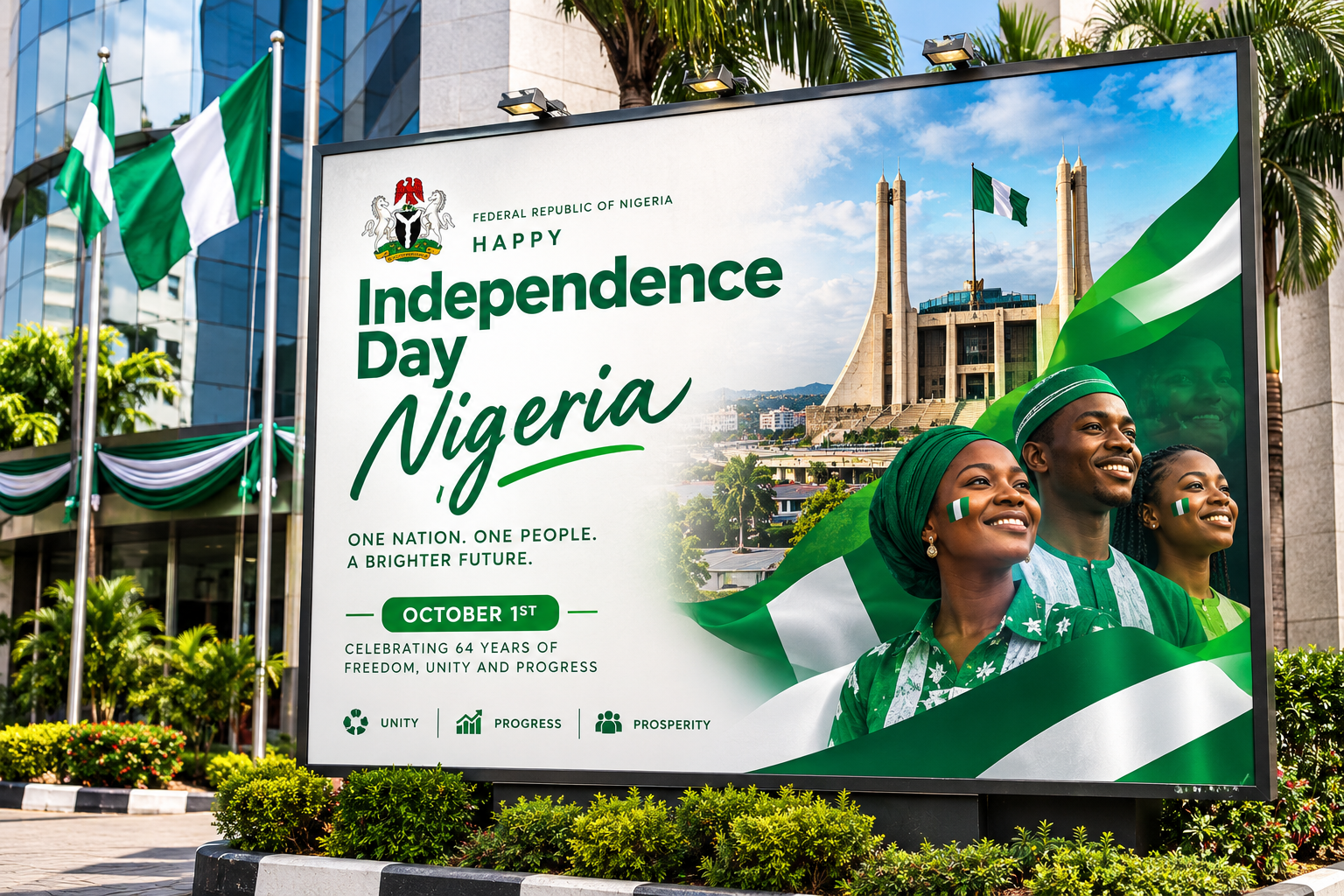
– Banners (for gates, fences, street-facing locations)
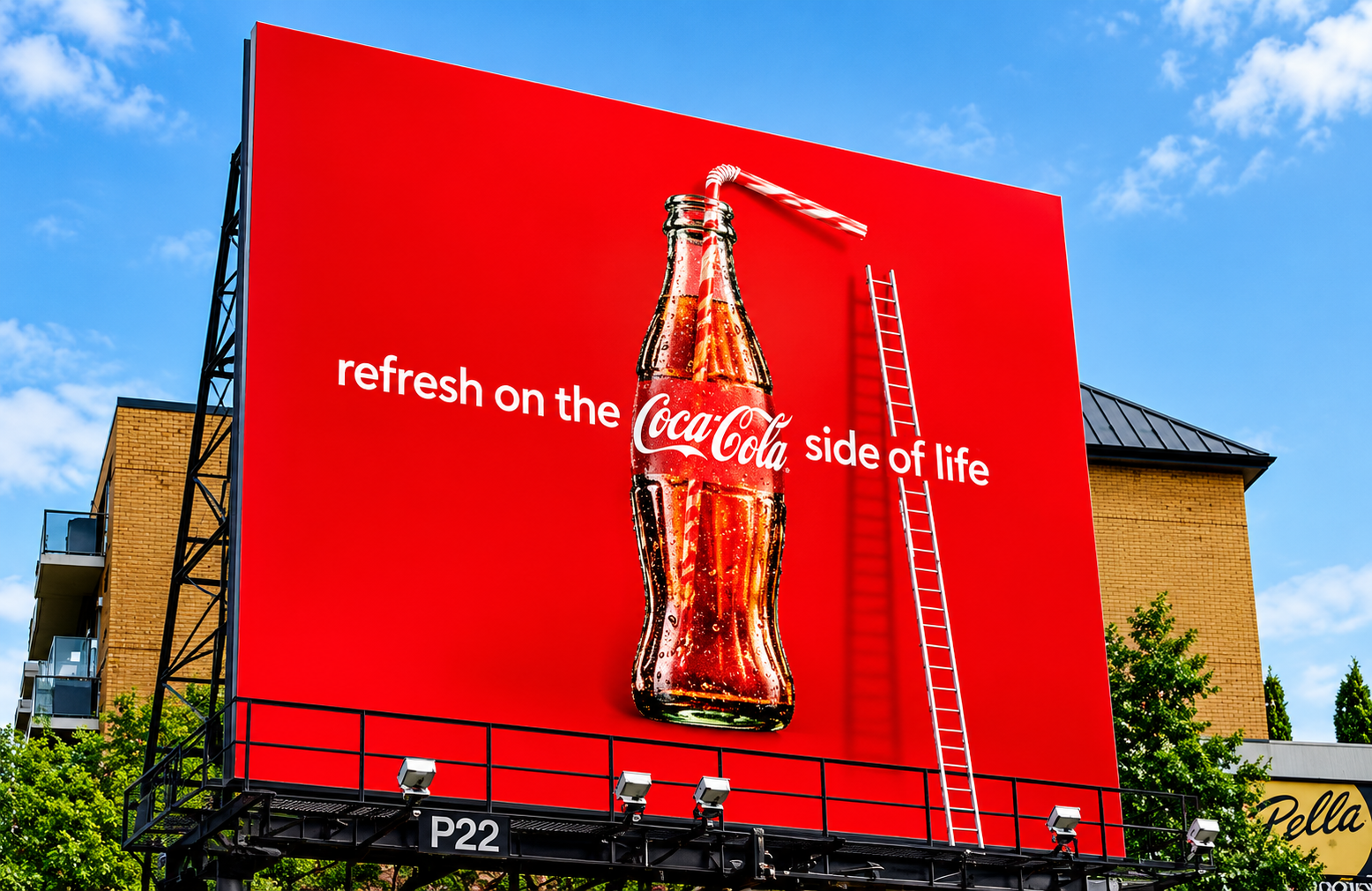
– Billboards or large format prints (for major visibility)
– Entrance signage (brand name, launch date, event title)
– Wayfinding boards (e.g., “Product Demo Zone” or “Customer Service”)
Best for: malls, pop-up events, outdoor activations, sponsored locations.
2) Backdrop signage (hero visuals)
Backdrops are the centerpiece of many launches because they create “photo moments.”
– Branded launch backdrops for staff welcome areas
– Product hero backdrops with high-impact graphics
– Step-and-repeat banners for social media content
– Stage banners for emcees and media coverage
Best for: press announcements, speeches, influencer events, launch ceremonies.
3) Directional and wayfinding signage
Wayfinding is about reducing confusion and keeping traffic flowing.
– Arrow signs and directional placards
– Floor stickers for indoor routes
– Room signs (e.g., “Demo”, “Register”, “Pick-Up”)
– Partition signs that label zones
Best for: large venues, exhibitions, multi-stall events, corporate halls.
4) Informational and educational signage
These signs support product understanding.
– Feature callout boards (benefits summarized clearly)
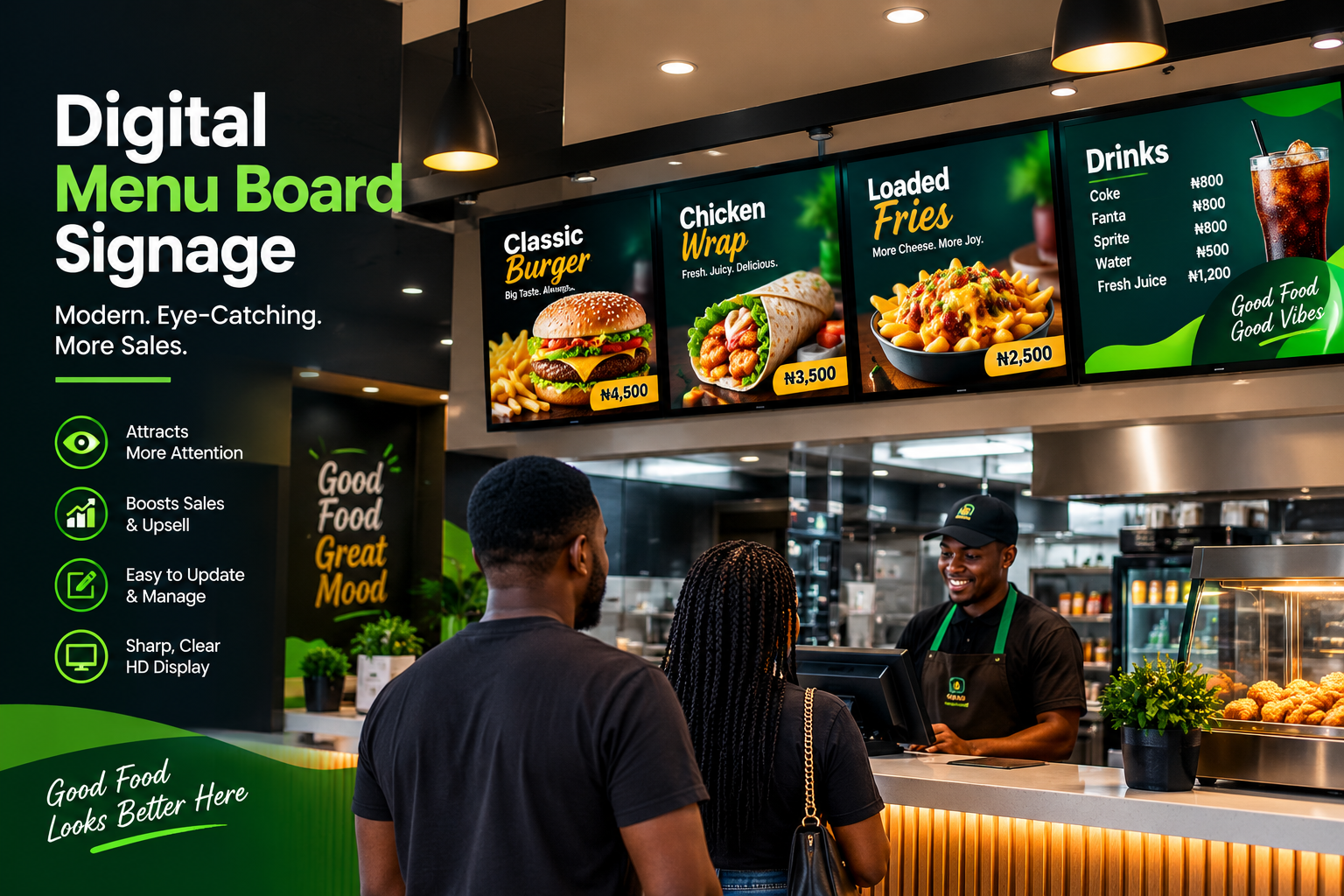
– Pricing or promo signage (for offers and bundles)
– How-it-works posters
– Safety or compliance signage where required
Best for: tech products, FMCG new variants, services with processes.
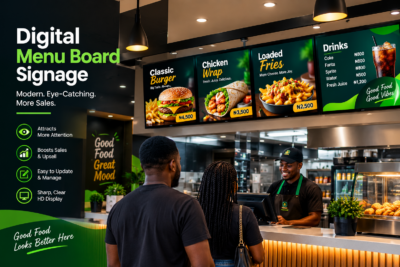
5) Point-of-purchase (POP) and point-of-sale signage
If your goal includes immediate sales, POP signage is essential.
– Countertop signs
– Shelf talkers and product labels
– Standing display boards
– Offer cards with limited-time messaging
Best for: retail launches, showrooms, promotions.
6) Interactive and engagement signage
Use these to turn attention into interaction.
– QR code signage for registrations, videos, and offers
– Social media prompts (e.g., hashtags)
– Leaderboard/benefit boards (for gamified launches)
– Sampling station signage with clear instructions
Best for: experiential marketing, digital-first product launches.
Even the best placement won’t fix weak design. Launch signage must be instantly readable and emotionally compelling.
1) Keep typography bold and legible
In a fast-moving crowd, your message should be readable at a glance.
– Use large font sizes
– Limit text density
– Use high contrast between text and background
– Keep key words consistent (brand name, product name, offer)
2) One message per sign
If a sign tries to communicate everything, nothing stands out. Aim for:
– Brand + product + core benefit on hero signs
– What to do next on action signs
– Where to go on directional signs
3) Use brand consistency across all touchpoints
Your signage should match:
– logo style and colors
– brand voice (tone of copy)
– product imagery style
– layout system (spacing, alignment, margins)
Consistency builds trust. When customers see that your signage looks professional, they subconsciously assume the product is reliable too.
4) Add product imagery strategically
If possible, use product photos or lifestyle visuals that show the product in context.
– For new-to-market products, imagery should clarify “what it is” quickly.
– For premium launches, imagery should feel polished and minimal.
– For high-energy brands, signage can use bolder colors and motion-like design patterns.
5) Create visual hierarchy
Visual hierarchy tells the brain where to look first. A good structure might be:
1. Brand name/logo (top or focal)
2. Product name (largest)
3. Benefit statement (secondary)
4. CTA (scan, buy, register, small but clear)
6) Use QR codes carefully
QR codes can be powerful, but only if the details are right:
– place QR codes where people naturally look
– test scanning with real devices
– link to a fast-loading page
– ensure the landing page matches the message on the sign
– avoid too much small text around the QR code
Placement determines whether your signage works or gets ignored. A good rule: design for sightlines and movement.
Outdoor placement tips
– Put hero signage at primary sightlines where people enter and approach.
– Use directional signage near turning points (entrances, intersections, hallways).
– Avoid placing important messages where people pass too quickly.
Indoor placement tips
– Ensure directional signs are visible before people need them.
– Use repeating markers (e.g., arrows or zone labels) to reduce uncertainty.
– Place “action signage” near the moment of decision: right beside counters, demo stations, and registration areas.
Consistency in wayfinding
If customers see signs in different styles, they may feel the space is disorganized. Keep wayfinding consistent in:
– font style and arrow design
– color coding by zone (if relevant)
– spacing and layout rules
– signage height and alignment
Launch signage is not only about what it looks like—it must survive real conditions: humidity, sunlight, handling, and transport.
Common signage materials
– Vinyl banners and flex prints: great for speed and visibility
– Foam boards and mounting boards: good for indoor informational signage
– Acrylic and glossy prints: premium look for product features
– PVC/metal backing: durable for repeated use
– Fabric backdrops: clean finish and good for photo walls
Production timeline planning
Because launches are time-sensitive, lead times are critical.
– Start design early (concept → mockups → approvals)
– Confirm dimensions and installation requirements
– Order and produce with buffer time for revisions
– Do a final proof check before printing
A common mistake is waiting for “final product details” too late. If you can’t finalize everything, design signage with placeholder elements and plan a controlled update process.
Budgeting: how to get maximum impact
A strong signage plan balances cost and visibility. Instead of spreading budget thin, prioritize:
1. Hero visibility (entry/launch backdrops / main banners)
2. Wayfinding (directional signs and floor guidance)
3. Conversion points (POP signage near sales or demos)
4. Engagement support (QR code and social media prompts)
If you must cut costs, reduce secondary informational boards first—keep signage that affects navigation and action.
To achieve consistent performance, track what signage actually does. Useful metrics include:
– Foot traffic into key zones (demo area vs. general area)
– Engagement rate for QR codes (scans per day / per hour)
– Registration conversions (registrations attributed to signage)
– Sales lift during the launch window
– Media/photo usage (how often backdrops are used and shared)
– Staff feedback on what customers asked repeatedly (often signage-related)
Even simple measurements can help your next launch outperform the previous one.
Avoid these pitfalls that can reduce the effectiveness of an otherwise great launch:
1. Too much text on hero signs
2. Poor contrast (messages become invisible from a distance)
3. Inconsistent brand styling across different sign types
4. Wrong placement (signage visible up close but not where decisions happen)
5. No clear CTA (customers don’t know what to do next)
6. Late approvals causing production delays
7. Untested QR codes leading to broken links or slow pages
8. Overcomplicated layouts that confuse the eye
Your goal is clarity under pressure.
Use this checklist to plan quickly and confidently:
Pre-launch planning
– Define launch zones (entry, demo, sales, registration, waiting area)
– Identify hero message (brand + product + offer/benefit)
– Create a consistent design system (colors, fonts, spacing)
– Decide CTA for each sign type (scan, buy, register, ask staff)
– Confirm dimensions for each signage location
– Establish production timeline and approval workflow
Content readiness
– Product name and visuals finalized
– Pricing/offers verified and accurate
– QR code landing pages tested
– Spelling and brand details proofed
– Safety or compliance messaging confirmed (if required)
Deployment and quality control
– Confirm installation plan (where signs mount or hang)
– Check visibility at likely viewing distances
– Do a final walk-through before launch day
– Keep spare signage in case of damage or adjustments
– Train staff on where customers should go and what signs mean
Product launches are about perception. Customers don’t just evaluate the product—they evaluate your organization. When signage is well designed and professionally executed, it signals:
– the brand is organized
– the message is clear
– the customer experience is planned
– the product launch is credible
Signage also helps your team work faster. When customers can navigate easily and understand offerings immediately, staff spend less time repeating explanations and more time converting interest into action.
Make your product launch feel unforgettable
Signage for product launches is a powerful tool that can transform the customer journey from “passing by” into “stopping, engaging, and purchasing.” When you design signage with a clear journey structure visibility, orientation, navigation, product discovery, and action, you create an experience customers remember and share.
From hero backdrops and directional markers to QR-driven engagement and point-of-sale prompts, every sign should serve a purpose. And that purpose should be measurable: more attention, better understanding, faster movement, and higher conversion.
SignFix Industrial Limited is an ideal partner for product launch signage because they specialize in delivering high-impact, brand-consistent visual solutions that support real customer journeys. They help businesses translate launch strategies into clear, attractive signage that guides people smoothly, communicates value quickly, and creates the kind of professional presentation customers trust, especially in time-sensitive launch environments.
Contact Us at: support@signfix.ng or info@signfix.ng or Call Us +234 903 336 6660