
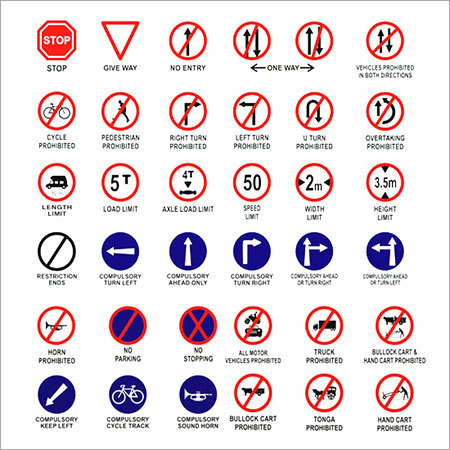
Every day, millions of people move through complex environments such as hospitals, airports, corporate offices, shopping malls, universities, industrial facilities, and public spaces. In these environments, one challenge remains constant: navigation.
When people cannot find their way easily, frustration increases, time is wasted, productivity drops, and in critical environments like hospitals or factories, safety can be compromised.
This is where Directional Signage Systems become essential.
Directional signage systems are structured visual communication tools designed to guide people from one point to another efficiently and clearly. They form the backbone of wayfinding systems and play a crucial role in shaping how people interact with physical environments.
More than just arrows and signs, directional signage is a combination of design strategy, psychology, architecture, branding, and human behavior analysis.
In this comprehensive guide, we will explore everything you need to know about directional signage systems, including their importance, components, design principles, applications, and future trends.
Directional signage systems refer to a coordinated set of signs used to guide people through spaces by providing clear instructions, arrows, maps, and navigation cues.
They are designed to answer one key question for users:
> “Where do I go next?”
These systems are strategically placed at decision points such as intersections, entrances, corridors, staircases, and elevators to ensure smooth navigation.
1. Improves Navigation Efficiency
Directional signage eliminates confusion and helps people reach their destinations faster.
2. Enhances User Experience
Visitors feel more comfortable and confident when they can easily navigate a space.
3. Reduces Staff Burden
Employees spend less time giving directions.
4. Increases Safety
Clear directional routes help during emergencies such as fires or evacuations.
5. Strengthens Brand Identity
Well-designed signage reflects professionalism and brand consistency.
A complete directional signage system consists of several essential components:
1. Arrows and Symbols
Universal indicators showing movement direction.
2. Text Instructions
Clear labels such as “Exit,” “Reception,” “Emergency Ward,” or “Warehouse A.”
3. Color Coding
Different colors are used to differentiate zones or departments.
4. Maps and Floor Plans
Visual layouts that help users understand the environment.
5. Location Hierarchy
Structured guidance from general zones to specific destinations.
6. Consistent Typography
Readable fonts that ensure clarity from a distance.
1. Wall-Mounted Directional Signs
Installed on walls to guide movement through corridors and hallways.
2. Ceiling-Hung Signs
Suspended signs visible from a distance, commonly used in malls and airports.
3. Freestanding Signs
Placed at intersections or open spaces.
4. Digital Directional Signage
Electronic screens that display dynamic directions.
5. Floor-Based Directional Markings
Arrows and guides placed on floors for pedestrian flow.
1. Corporate Offices
Guiding visitors to departments, meeting rooms, and exits.
2. Hospitals and Healthcare Facilities
Helping patients find wards, pharmacies, and emergency areas.
3. Shopping Malls
Directing customers to stores, restrooms, and entertainment areas.
4. Airports and Transport Hubs
Managing large passenger flows efficiently.
5. Educational Institutions
Assisting students and visitors in navigating campuses.
6. Industrial Facilities
Directing workers safely around machinery and restricted zones.
1. Clarity
Messages must be simple and instantly understandable.
2. Consistency
Fonts, colors, and symbols must remain uniform across all signs.
3. Visibility
Signs must be placed where they are easily seen.
4. Predictability
Users should expect signage at every decision point.
5. Hierarchy of Information
Important directions must stand out clearly.
6. Accessibility
Must support people with disabilities and multilingual users.
Directional signage systems rely heavily on human cognitive behavior.
Key psychological principles include:
* Cognitive mapping: People build mental maps of spaces
* Decision points: Users rely on signs at intersections
* Visual memory: Symbols are easier to remember than text
* Color association: Colors trigger fast recognition
* Repetition effect: Repeated signage improves navigation confidence
A well-designed system reduces cognitive load and improves decision-making speed.
Durability and visibility are key in material selection.
Common materials include:
* Aluminum composite panels
* Acrylic sheets
* Stainless steel
* Vinyl graphics
* LED illuminated panels
* Wood laminate finishes
* Reflective materials for low light areas
| Feature | Directional Signage | General Signage |
| ———— | ——————- | ———————- |
| Purpose | Guide movement | Provide information |
| Placement | Decision points | Fixed locations |
| Design focus | Navigation flow | Communication |
| Example | “← Exit” | “Welcome to Reception” |
1. Poor Placement
Signs placed too early or too late cause confusion.
2. Overloading Information
Too much text reduces readability.
3. Inconsistent Design
Mixed styles break visual flow.
4. Lack of Maintenance
Faded or broken signs reduce effectiveness.
5. Ignoring User Flow
Signs not aligned with actual movement patterns fail users.
* Faster navigation across spaces
* Reduced confusion and frustration
* Improved operational efficiency
* Enhanced safety during emergencies
* Stronger brand presence
* Better visitor experience
Modern systems are evolving beyond static signs.
1. Smart Digital Displays
Real-time updates for directions.
2. Mobile Navigation Apps
Indoor GPS-style navigation.
3. QR Code Integration
Instant access to maps and instructions.
4. Augmented Reality (AR)
Overlay directions on real-world environments.
5. AI-Powered Wayfinding
Adaptive systems that learn traffic patterns.
Step 1: Environmental Analysis
Study building layout and traffic flow.
Step 2: User Behavior Mapping
Identify how people move through the space.
Step 3: Strategy Development
Define signage hierarchy and system structure.
Step 4: Design Creation
Develop signage layouts and visual language.
Step 5: Material Selection
Choose durable and appropriate materials.
Step 6: Production
Manufacture signage with precision and consistency.
Step 7: Installation
Place signage at strategic decision points.
Step 8: Evaluation
Test system effectiveness and improve where needed.
*Corporate Environments
Improves visitor navigation and professionalism.
*Healthcare Facilities
Reduces stress and improves emergency response.
*Retail Spaces
Enhances customer flow and shopping experience.
*Transport Systems
Manages large crowds efficiently.
*Industrial Sites
Improves safety and operational clarity.
1. Fully Digital Navigation Systems
Replacing static signs with dynamic displays.
2. AI-Based Adaptive Signage
Systems that change based on crowd movement.
3. Sustainable Materials
Eco-friendly signage production.
4. Multilingual Smart Displays
Automatic translation for global users.
5. Integrated Smart Buildings
Seamless connection between signage and building systems.
When it comes to designing and implementing professional directional signage systems, precision, clarity, and durability are essential.
SignFix Industrial Limited is a trusted leader in delivering world-class signage and wayfinding solutions tailored for corporate, commercial, and industrial environments.
Here’s why SignFix Industrial Limited is the right choice:
* Expertise in complex wayfinding and directional systems
* High-quality materials built for long-term durability
* Custom design solutions aligned with brand identity
* Advanced production technology for precision finishing
* Deep understanding of user flow and spatial navigation
* End-to-end service from design to installation
* Proven success across multiple industries
With SignFix Industrial Limited, every directional signage system is designed not just to guide, but to enhance experience, safety, and brand value.
Directional signage systems are a critical part of modern infrastructure. They transform complex environments into simple, navigable, and user-friendly spaces.
From corporate offices to hospitals and industrial sites, effective directional signage improves efficiency, safety, and user satisfaction.
As environments become more complex, the demand for intelligent, well-designed, and integrated signage systems will continue to grow.
Organizations that invest in professional directional signage systems are investing in clarity, safety, and operational excellence.
Contact Us at support@signfix.ng or info@signfix.ng or Call Us +234 903 336 6660