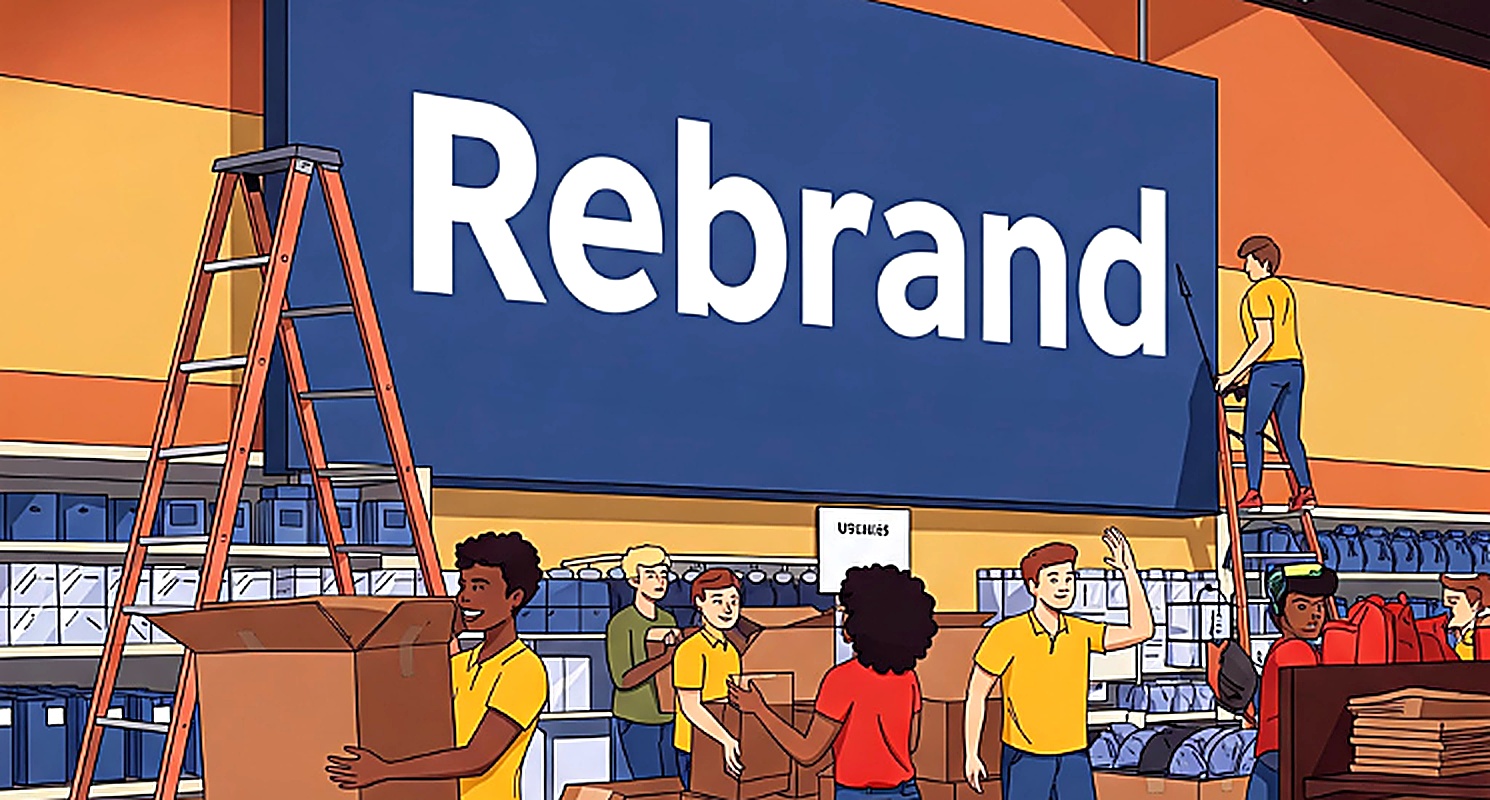
A business can change dramatically over time. Its products may improve, its target audience may evolve, its services may expand, and its overall brand identity may become more modern. However, one important part of the business can sometimes remain unchanged for years: its signage.
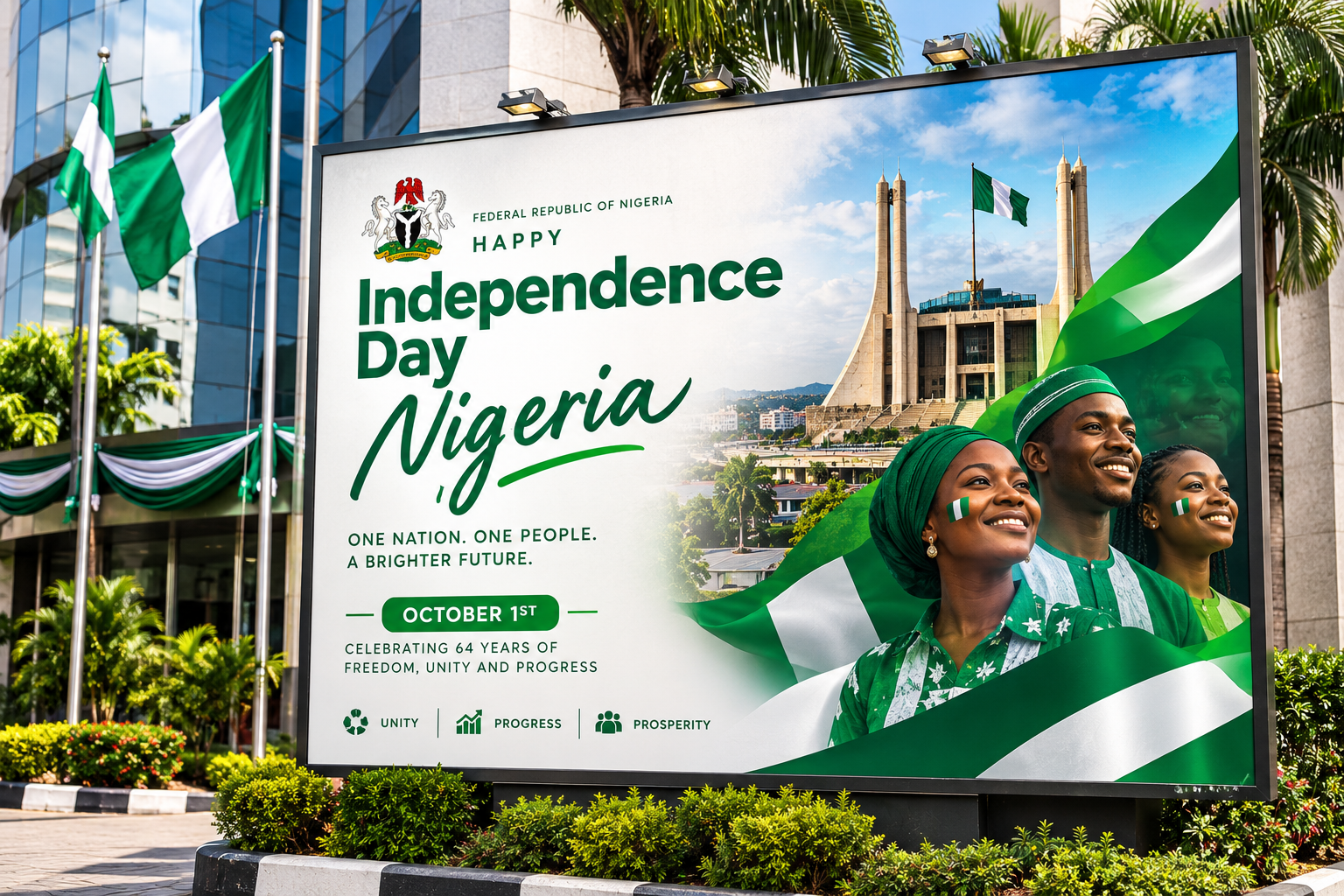
Signage is often one of the first things customers see when they encounter a business. A storefront sign, office sign, reception sign, directional sign, billboard, vehicle graphic, or indoor display can communicate important information about a company before a customer ever speaks with an employee.
This is why a signage rebrand refresh can be an important part of updating a business identity.
A signage refresh does not necessarily mean completely changing everything. Sometimes, the most effective approach is to modernize existing signs while maintaining recognizable elements of the brand. Other times, a complete signage redesign may be appropriate, especially when a company has undergone a major rebrand.
The goal is to create signage that reflects the company’s current identity, communicates clearly, looks professional, and provides a consistent experience across physical locations.
For businesses in Nigeria and other competitive markets, professional signage can also help a company stand out in busy commercial environments.
This Signage Rebrand Refresh Guide explains what signage rebranding means, when your business may need a refresh, how to plan the process, common mistakes to avoid, and how professional signage can support a stronger brand identity.
A signage rebrand refresh is the process of updating a company’s physical or digital signage so that it better reflects its current brand identity.
It may involve small visual improvements or a complete redesign.
A refresh can include:
* Updating colours
* Changing fonts
* Replacing outdated logos
* Improving sign layouts
* Updating materials
* Installing new lighting
* Replacing damaged signs
* Introducing modern 3D lettering
* Improving wayfinding
* Updating storefront signage
* Redesigning reception signs
* Updating office directories
* Refreshing vehicle branding
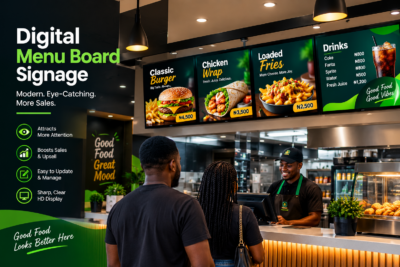
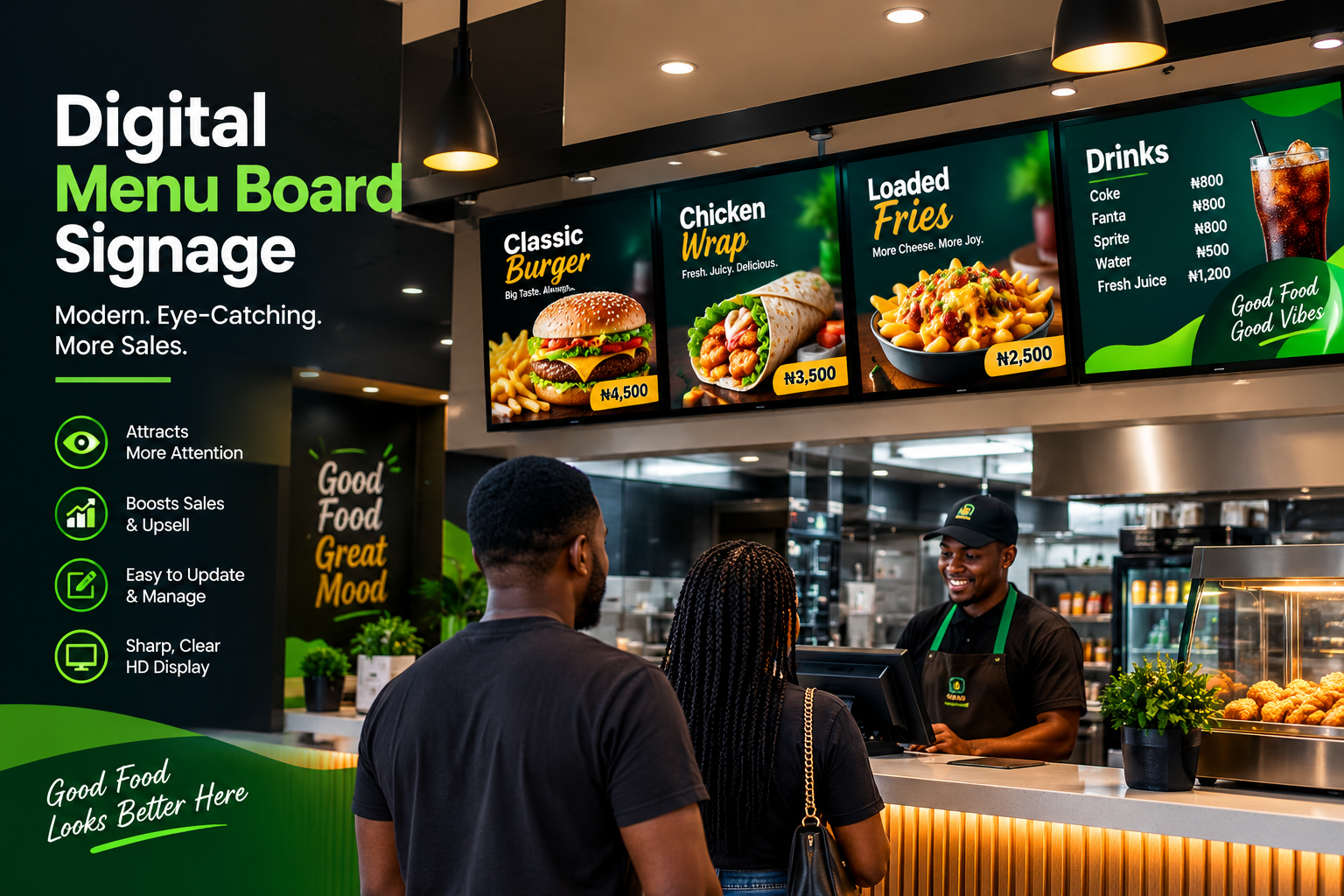
* Introducing digital signage
* Creating a consistent signage system
A refresh is different from simply replacing an old sign.
Replacing a damaged sign restores its physical appearance. A signage rebrand refresh considers the bigger picture: Does the sign still represent the business accurately?
For example, a company that originally used a basic printed sign may now have a modern brand identity with new colours, typography and logo guidelines. Continuing to use the old signage can create inconsistency between the company’s marketing and its physical environment.
A signage refresh brings those elements together.
A company may invest heavily in its website, social media, packaging and advertising during a rebrand. However, customers who visit the physical location still encounter the old identity if the signage has not been updated.
This can create a disconnect.
Imagine a company launches a new logo and colour palette online but continues using its previous logo on the building exterior. Customers may see two different versions of the business.
Consistent signage helps reinforce the same identity across physical touchpoints.
Your signage can communicate:
* Who your business is
* What your company offers
* Where customers should go
* How customers can identify your location
* What kind of experience customers can expect
* Which areas belong to your company
* Important safety or directional information
Good signage therefore performs both a branding function and a communication function.
Not every business needs to replace all its signs. However, several warning signs can indicate that an update is worth considering.
1. Your Logo Has Changed
If your company has introduced a new logo, your signage should normally be reviewed.
Keeping the old logo on physical signs can undermine the consistency of the rebrand.
The updated logo should be applied appropriately to:
* Exterior signs
* Reception signs
* Directional signs
* Office signs
* Vehicle graphics
* Promotional displays
* Indoor branding
2. Your Signage Looks Outdated
Design trends change, but timelessness is more important than following every trend.
A sign can begin to look outdated because of:
* Old typography
* Faded colours
* Poor spacing
* Low-quality graphics
* Damaged surfaces
* Outdated materials
* Poor lighting
* Excessive information
* Weak visual hierarchy
A signage refresh can modernize the appearance without necessarily changing the company’s entire identity.
3. Your Brand Has Expanded
A business that started with one location may eventually have multiple offices, branches, warehouses, stores or service points.
When expansion happens, signage often becomes inconsistent.
One location may use one sign style while another uses a different colour, font or material.
A rebrand refresh can establish a consistent signage system across all locations.
4. Your Target Audience Has Changed
Businesses evolve.
A company that originally served one audience may later target:
* Corporate clients
* Younger consumers
* Families
* Professionals
* International customers
* Retail shoppers
* Industrial clients
* Technology users
If the brand positioning has changed, the signage may also need to evolve.
The design should reflect the company’s current audience without sacrificing readability.
5. Your Signs Are Difficult to Read
A beautiful sign is not useful if customers cannot read it.
Common readability problems include:
* Small lettering
* Poor contrast
* Excessive decoration
* Complicated fonts
* Too much information
* Poor lighting
* Incorrect placement
A signage refresh provides an opportunity to improve visibility and communication.
6. Your Signage Is Damaged
Physical deterioration can affect how customers perceive a business.
Signs may become damaged because of:
* Weather
* Sun exposure
* Dust
* Moisture
* Accidental impact
* Poor installation
* Age
* Inadequate maintenance
A damaged sign can make an otherwise professional business environment appear neglected.
7. Your Physical Location Does Not Match Your Marketing
This is a common rebranding problem.
A company may have a modern website, professional social media presence and updated promotional materials, while its physical location still carries an older identity.
Customers experience the brand through multiple touchpoints.
A signage refresh helps close the gap between digital branding and physical branding.
A successful signage project should begin with planning rather than immediately choosing colours or materials.
Here is a practical process.
Step 1: Audit Your Existing Signage
Start by documenting every sign currently used by the business.
Create a list of:
* Exterior signs
* Storefront signs
* Reception signs
* Directional signs
* Safety signs
* Room signs
* Parking signs
* Promotional displays
* Vehicle signage
* Wall graphics
* Digital displays
* Building identification signs
Take photographs of each sign.
Then assess their condition and relevance.
Ask:
Does this sign still need to exist?
Does the information remain accurate?
Does it use the current brand identity?
Is it easy to read?
Does it look professional?
This audit creates a clear starting point.
Step 2: Define Your New Brand Identity
Before designing new signage, establish the visual elements that should appear consistently.
These may include:
* Logo
* Primary colours
* Secondary colours
* Typography
* Brand imagery
* Graphic elements
* Iconography
* Tagline
* Brand messaging
If your company already has brand guidelines, use them as the foundation for signage design.
A signage company should work from these guidelines whenever possible.
Step 3: Identify the Purpose of Each Sign
Different signs have different jobs.
A storefront sign identifies the business.
A reception sign establishes brand presence.
A directional sign helps visitors navigate.
A safety sign communicates important instructions.
A promotional sign encourages customers to take action.
Because these signs have different purposes, they should not all be designed identically.
Instead, they should belong to the same visual system.
Step 4: Choose Suitable Materials
Material selection affects appearance, durability and maintenance.
Depending on the application, signage can use materials such as:
* Acrylic
* Aluminium
* Stainless steel
* PVC
* Vinyl
* Glass
* Wood
* Composite materials
* LED components
The correct material depends on the location, environment, design and intended lifespan.
For exterior signage, weather resistance is especially important.
For indoor corporate environments, materials such as acrylic, metal and dimensional lettering may provide a polished appearance.
Step 5: Consider Lighting
Lighting can transform signage, especially in commercial environments.
Common options include:
Front-lit signs
Light illuminates the front surface of the sign.
Backlit signs
Light is positioned behind the letters or logo to create a glow effect.
Halo-lit lettering
Lighting creates a subtle glow around individual letters.
LED signage
LED technology can provide visibility while supporting different design possibilities.
Lighting should support readability rather than make the sign unnecessarily complicated.
Step 6: Create a Signage Hierarchy
Not every sign needs to be equally large.
A good signage system establishes hierarchy.
For example:
Primary identification
Large building or storefront sign.
Secondary identification
Reception or department signage.
Navigation
Directional and wayfinding signs.
Information
Opening hours, service information and instructions.
Promotional
Campaigns, products and special offers.
This hierarchy makes the environment easier to understand.
The storefront is one of the most important areas to consider during a rebrand.
A storefront sign should make the business easy to identify.
Important factors include:
Visibility
Can people see the sign from an appropriate distance?
Readability
Can customers understand the business name quickly?
Placement
Is the sign positioned where people naturally look?
Brand consistency
Does it match the company’s current visual identity?
Lighting
Will the sign remain visible during evening hours?
A professional storefront sign can help create a recognizable physical presence.
Corporate offices often require a broader signage system.
This may include:
* Reception signs
* Lobby signs
* Department signs
* Room signs
* Floor directories
* Directional signs
* Meeting-room signs
* Safety signs
* Staff-area signs
* Visitor information
Reception signage deserves particular attention because it is often one of the first branded elements visitors encounter.
A well-designed reception sign can reinforce the company’s identity while contributing to the overall appearance of the office.
Retail environments depend heavily on visual communication.
Customers need to quickly understand:
* What the store sells
* Where products are located
* What promotions are available
* Where to pay
* Where to find assistance
* Where different departments are located
Retail signage should therefore combine branding with practical information.
A signage refresh can also help create a more cohesive customer experience across different sections of the store.
Wayfinding signage helps people move through an environment.
It is especially useful in:
* Hospitals
* Universities
* Hotels
* Shopping centres
* Corporate offices
* Airports
* Government buildings
* Large commercial facilities
* Industrial facilities
A wayfinding system should use consistent:
* Arrows
* Typography
* Colours
* Icons
* Terminology
* Placement
Consistency helps visitors understand the system quickly.
For example, if one sign uses the word “Reception” and another uses “Front Desk” for the same destination, visitors may become uncertain.
A good signage refresh reviews the terminology as well as the visual design.
Colour is one of the most noticeable elements of a brand.
However, choosing colours for signage requires more than selecting attractive combinations.
Consider:
* Brand colours
* Contrast
* Visibility
* Lighting
* Surrounding environment
* Material
* Distance
* Accessibility
* Indoor or outdoor use
High contrast can improve readability.
For example, dark lettering on a light background or light lettering on a sufficiently dark background can generally provide clearer visual separation than combinations with very little contrast.
Your signage should remain recognizably branded while prioritizing communication.
Typography has a major effect on readability.
When selecting fonts for signage, consider:
* Letter size
* Letter spacing
* Font weight
* Distance from viewers
* Lighting
* Viewing angle
* Background contrast
Decorative fonts can be attractive in logos or promotional graphics but may be less suitable for important directional information.
For navigation and identification signs, clarity should remain a priority.
Three-dimensional lettering is commonly used for:
* Reception signs
* Corporate offices
* Retail stores
* Hotels
* Restaurants
* Showrooms
* Building entrances
3D letters can add depth and visual interest.
They may be produced using materials such as acrylic, metal, PVC or other suitable substrates.
The final appearance depends on:
* Letter thickness
* Material
* Finish
* Colour
* Mounting method
* Lighting
* Wall surface
When properly designed and installed, dimensional lettering can become a strong feature of a branded environment.
Businesses are also incorporating digital signage into modern environments.
Digital displays can allow companies to change content without physically replacing the sign.
They can be used for:
* Promotions
* Announcements
* Menus
* Directions
* Corporate communications
* Product information
* Event information
* Customer education
However, digital signage should complement rather than replace every form of physical signage.
Permanent identification and directional signs may still be necessary.
If your company operates vehicles, consider including them in the rebranding process.
A vehicle can function as a mobile brand touchpoint.
Vehicle graphics may include:
* Logo
* Company name
* Website
* Telephone number
* Services
* Brand colours
* Social media information
The design should remain readable while the vehicle is stationary or moving.
Avoid overcrowding the available space with excessive information.
Rebranding should not mean removing or compromising essential safety information.
Safety signs serve a different purpose from promotional branding.
They communicate information about:
* Emergency exits
* Fire equipment
* Restricted areas
* Hazards
* Protective equipment
* Emergency procedures
When refreshing a facility, safety signage should remain clear, visible and appropriately positioned.
Where applicable, businesses should also consider relevant local regulations, building requirements and industry standards.
Mistake 1: Changing Everything Without a Strategy
A rebrand should have a clear reason.
Replacing every sign simply because the old signs look dated can create unnecessary expense.
Start with an audit.
Mistake 2: Prioritizing Appearance Over Readability
A sign can look impressive but still fail if customers cannot understand it.
Communication should remain central to signage design.
Mistake 3: Using Too Many Colours
A company’s signage does not need to use every colour associated with the brand.
A controlled colour system can create a cleaner appearance.
Mistake 4: Using Too Much Text
Signs are usually viewed quickly.
If a customer has to stop and read a large paragraph before understanding the message, the sign may need simplification.
Mistake 5: Ignoring the Environment
A sign should be designed for its surroundings.
Consider:
* Wall colour
* Building architecture
* Lighting
* Traffic
* Pedestrian movement
* Viewing distance
* Competing visual elements
Mistake 6: Forgetting Maintenance
A signage project should consider what happens after installation.
Ask about:
* Cleaning
* Lighting maintenance
* Replacement components
* Weather exposure
* Surface protection
* Repairs
Proper maintenance helps preserve the appearance of the investment.
There is no single price for a signage rebrand.
The cost depends on several factors, including:
* Number of signs
* Sign dimensions
* Materials
* Design complexity
* Lighting
* Installation requirements
* Building height
* Location
* Quantity
* Custom fabrication
* Removal of existing signs
* Electrical work
* Transportation
* Maintenance requirements
A single reception sign will naturally require a different budget from a complete signage rollout across several branches.
Businesses should therefore begin with a signage audit and project requirements before requesting a quotation.
Choosing a signage company involves more than comparing prices.
Consider whether the company can support the project from concept to installation.
Important questions include:
Do they provide design services?
Professional design can help turn a brand identity into practical physical signage.
Can they fabricate the signs?
Fabrication quality affects the final result.
Do they provide installation?
Proper installation is important for both appearance and durability.
Can they handle different signage types?
A complete project may involve storefront, indoor, directional, illuminated and vehicle signage.
Do they understand branding?
The signage should communicate the company’s identity consistently.
Do they provide maintenance or support?
Long-term support can be useful when signage requires repairs or replacement.
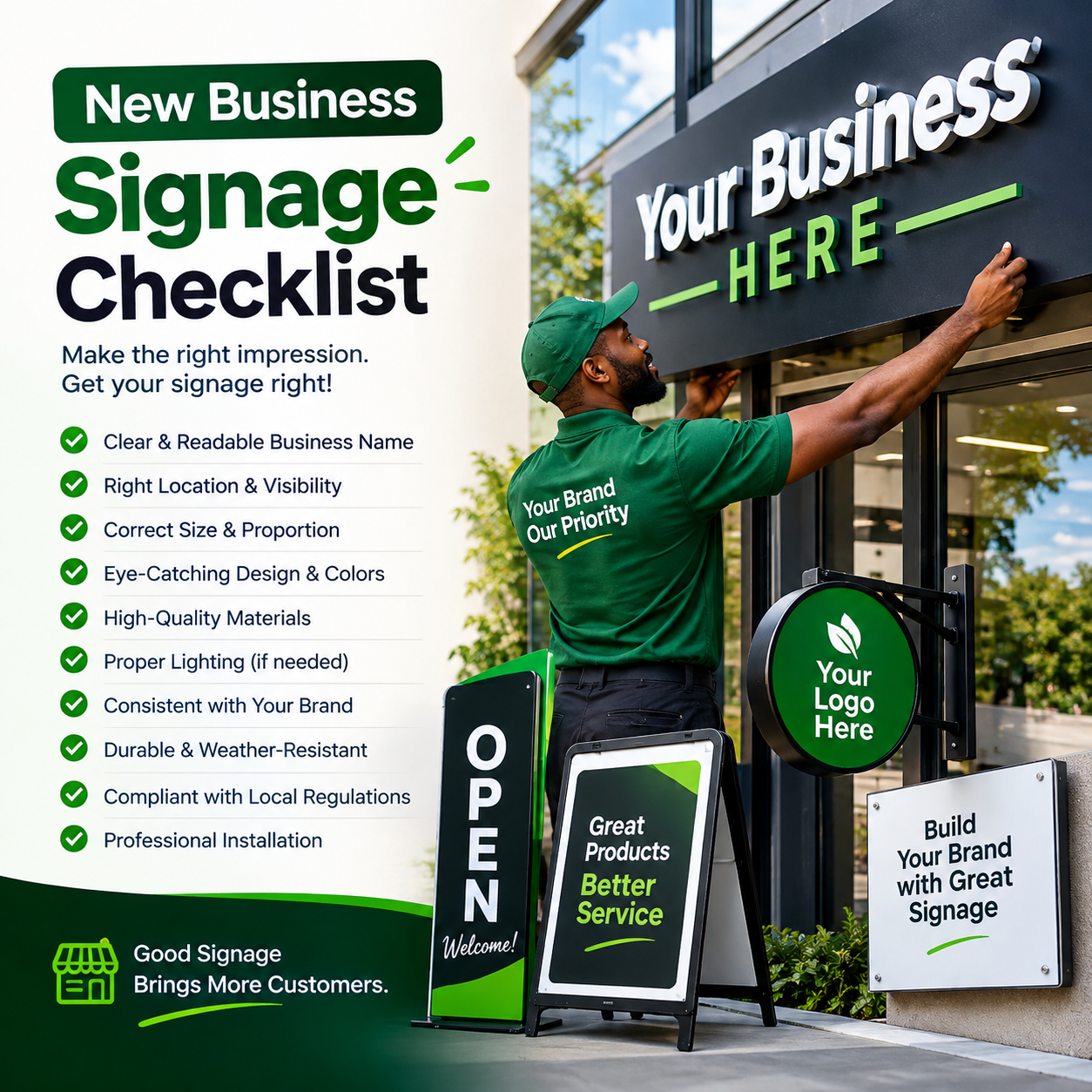
Before approving a signage refresh, review the following:
Brand
* Current logo
* Brand colours
* Typography
* Brand guidelines
* Tagline
Existing signage
* Exterior signs
* Interior signs
* Directional signs
* Safety signs
* Vehicle graphics
* Digital displays
Design
* Readability
* Colour contrast
* Appropriate typography
* Consistent layouts
* Clear hierarchy
Materials
* Suitable material
* Durability
* Weather resistance
* Maintenance requirements
Installation
* Site assessment
* Measurements
* Mounting method
* Electrical requirements
* Installation access
Final review
* Proof approved
* Spelling checked
* Contact information verified
* Logo approved
* Sign dimensions confirmed
* Installation completed
Brand recognition develops through repeated exposure.
When customers repeatedly see consistent colours, logos, typography and visual elements, those elements can become associated with the business.
Signage provides one of the physical channels through which this consistency can be maintained.
Consider a customer visiting a company for the first time.
They may encounter:
1. The exterior building sign.
2. The entrance sign.
3. The reception logo.
4. Directional signage.
5. Department signs.
6. Product displays.
7. Promotional graphics.
If these elements share a coherent visual identity, the customer experiences the brand as one connected system.
That is the real value of a signage rebrand.
It is not simply about producing a new sign.
It is about creating a consistent physical representation of the business.
For businesses operating in Nigeria, signage also needs to respond to local environmental and commercial conditions.
Depending on the location, signs may be exposed to:
* Strong sunlight
* Rain
* Dust
* Humidity
* Traffic
* Outdoor pollution
* Frequent customer movement
Material selection and installation quality therefore matter.
Businesses should also consider how signs appear in busy commercial areas where numerous companies compete for attention.
A professional signage solution should balance visibility, durability, branding and clear communication.
Whether the business is a retail store, corporate office, school, hospital, hotel, restaurant, real estate company or industrial facility, the signage system should be designed around the environment and audience.
There is no universal schedule for rebranding signage.
However, consider reviewing your signage when:
* Your logo changes.
* Your company name changes.
* Your brand colours change.
* You relocate.
* You open a new branch.
* Your business expands.
* Your existing signs become damaged.
* Customers struggle with navigation.
* Your physical location looks different from your online branding.
* Your signage no longer represents the company’s current positioning.
A signage audit can help determine whether you need a minor refresh, partial replacement or complete signage redesign.
A successful signage rebrand requires more than attractive artwork. It requires a partner that understands design, fabrication, branding, installation and the practical demands of physical signage.
SignFix Industrial Limited can help businesses transform their branding into professional signage solutions designed for real-world environments.
From corporate and commercial signage to customized branding applications, the focus should be on creating signs that are visually appealing, functional and aligned with the customer’s brand identity.
Working with a professional signage company can also simplify the process by bringing different stages together—from planning and design to production and installation.
For businesses planning a signage refresh, SignFix Industrial Limited provides an opportunity to approach the project as a complete branding exercise rather than simply replacing old signs.
Whether you are updating a storefront, redesigning an office reception, improving wayfinding, refreshing corporate branding, upgrading illuminated signs or developing signage for a new location, the right signage partner can help bring the new identity to life.
SignFix Industrial Limited is ready to help your business create signage that communicates clearly, looks professional and reflects the brand you are building today.
A signage rebrand refresh is an opportunity to bring your physical business environment in line with your current brand identity.
The process begins with an audit of existing signage, followed by clear brand guidelines, thoughtful design, suitable materials, effective typography, appropriate lighting and professional installation.
The objective is not simply to make signs look newer.
The objective is to create a signage system that is recognizable, readable, consistent, durable and useful.
Whether you operate a small business, retail outlet, corporate office, educational institution, healthcare facility, hotel or industrial company, professional signage can help create a more cohesive physical brand experience.
If your business has recently rebranded—or your existing signage no longer represents where your company is today—it may be time for a signage refresh.
Make your brand visible. Make it memorable. Make your signage work for your business.
Contact Us:
Email: support@signfix.ng
Alternative Email: info@signfix.ng
Phone: +234 903 336 6660