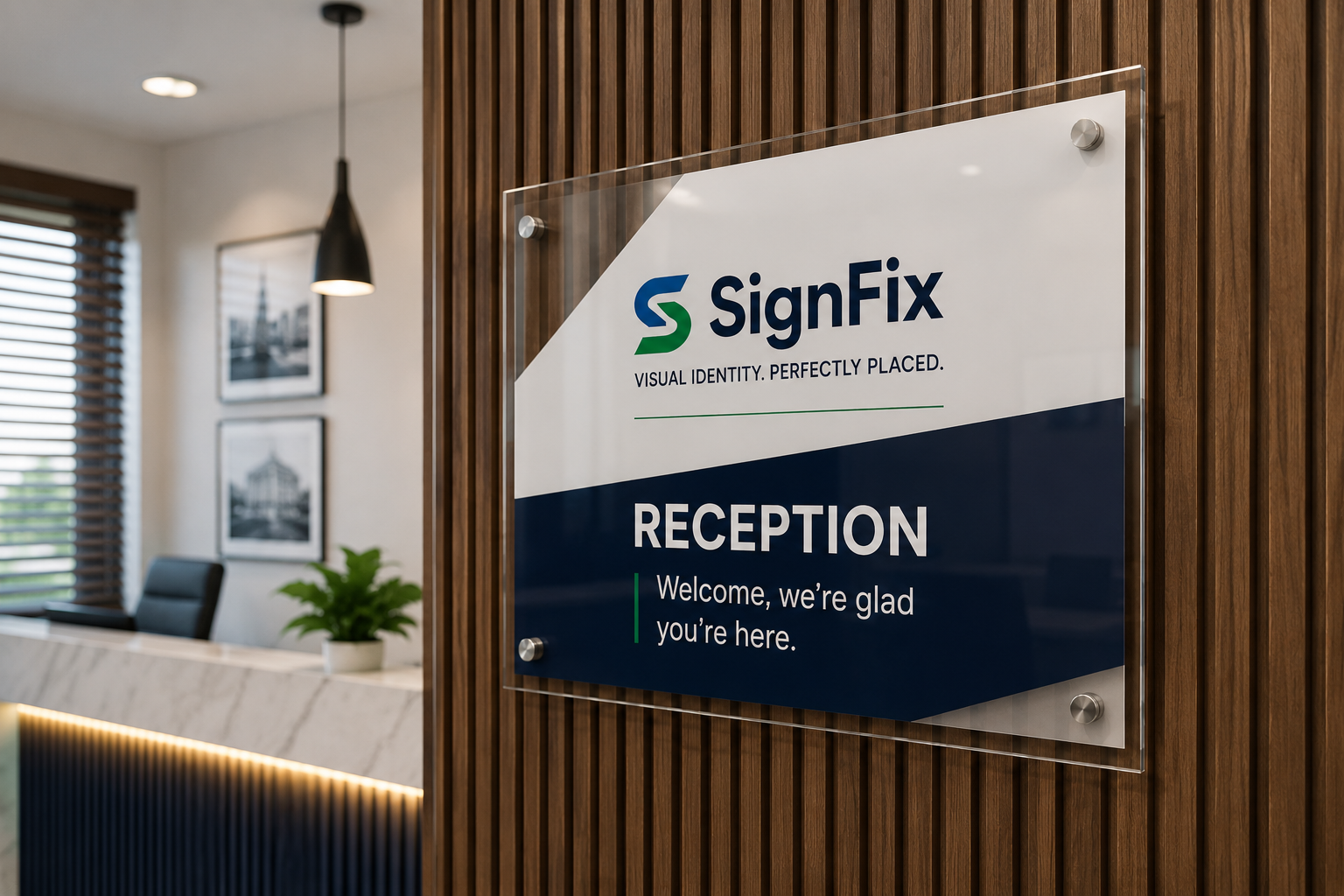
The reception area is the first physical touchpoint between a business and its visitors. Whether it is a corporate office, hospital, hotel, government institution, or industrial headquarters, the reception area sets the tone for the entire experience.
And at the center of this critical space is one powerful communication tool: Reception Signage.
Reception signage is more than just a name board behind the front desk. It is a strategic branding and communication element that shapes first impressions, guides visitors, reinforces identity, and communicates professionalism.
In today’s competitive business environment, organizations cannot afford to overlook the importance of reception signage. A poorly designed reception area creates confusion and weakens brand perception, while a well-designed one builds trust, authority, and credibility instantly.
This blog explores everything you need to know about reception signage essentials—its importance, types, design principles, materials, applications, and implementation strategies.
Reception signage refers to the visual branding and informational displays located in a reception or lobby area of a building. It typically includes:
* Company name signs
* Logo displays
* Welcome signs
* Directional indicators
* Digital reception screens
* Informational boards
Its main purpose is to communicate identity, guide visitors, and create a strong first impression.
1. Creates First Impressions
The reception area is the first thing visitors see. A professional signage system immediately builds trust and credibility.
2. Reinforces Brand Identity
Reception signage visually communicates your brand personality, values, and professionalism.
3. Improves Visitor Experience
Clear signage reduces confusion and helps visitors feel welcomed and guided.
4. Enhances Professionalism
A well-designed reception area reflects organization, structure, and attention to detail.
5. Supports Wayfinding
Reception signage often acts as the starting point for navigation within a building.
1. Wall-Mounted Reception Signs
These are fixed behind or near the reception desk and display the company name or logo.
2. 3D Logo Signs
Raised lettering or logos that create a premium and modern look.
3. Backlit LED Signs
Illuminated signage that enhances visibility and luxury appeal.
4. Acrylic Reception Signs
Clean and modern signs made from transparent or colored acrylic.
5. Digital Reception Displays
Screens that show company information, announcements, or visitor instructions.
6. Frosted Glass Signs
Elegant signage often used in corporate and high-end environments.
Reception signage serves multiple roles:
1. Branding Function
It communicates the identity of the organization.
2. Informational Function
It provides essential visitor guidance.
3. Directional Function
It helps visitors know where to go next.
4. Psychological Function
It builds trust and reduces uncertainty.
1. Simplicity
A clean and uncluttered design ensures instant recognition.
2. Visibility
Signs must be clearly visible from the entrance.
3. Brand Consistency
Typography, colors, and materials must match the brand identity.
4. Balance and Proportion
Signage should align with reception desk and wall space.
5. Lighting Integration
Proper lighting enhances visibility and elegance.
6. Material Quality
High-quality materials communicate professionalism.
Reception signage must combine durability with aesthetics.
Common materials include:
* Acrylic sheets
* Stainless steel
* Aluminum composite panels
* Glass (frosted or clear)
* Wood finishes
* LED illuminated panels
* Vinyl graphics
Each material contributes to a different visual identity and brand tone.
Reception signage is not just decorative—it is strategic branding.
•How it supports branding:
* Reinforces corporate identity
* Communicates brand values
* Builds emotional connection
* Enhances customer perception
* Differentiates from competitors
A strong reception sign can communicate luxury, innovation, trust, or creativity within seconds.
1. Overcomplicated Designs
Too many elements reduce clarity.
2. Poor Lighting
Dim signage reduces impact and visibility.
3. Inconsistent Branding
Mismatch with company identity weakens brand message.
4. Wrong Placement
Signs placed too high or too low reduce visibility.
5. Low-Quality Materials
Cheap materials reduce professional appearance.
Reception signage is used across multiple industries:
1. Corporate Offices
Displays company identity and departments.
2. Hospitals
Guides patients and visitors.
3. Hotels
Welcomes guests and enhances hospitality experience.
4. Schools and Universities
Provides institutional identity and guidance.
5. Government Buildings
Ensures structure and professionalism.
6. Industrial Facilities
Helps visitors identify company zones and offices.
Reception signage influences how people perceive a business.
Key psychological effects include:
* First impression bias: Visitors judge professionalism within seconds
* Color psychology: Colors influence mood and perception
* Typography trust effect: Clean fonts increase credibility
* Environmental comfort: Clear signage reduces anxiety
A well-designed reception area immediately makes visitors feel confident and comfortable.
1. Minimalist Designs
Simple and elegant branding styles are becoming popular.
2. LED Backlit Logos
Luxury corporate branding trend.
3. Interactive Digital Displays
Touchscreens for visitor registration and information.
4. Smart Reception Systems
Integrated digital check-in and signage systems.
5. Eco-Friendly Materials
Sustainable signage production is increasing.
Step 1: Brand Analysis
Understand company identity and values.
Step 2: Space Evaluation
Assess reception layout and wall dimensions.
Step 3: Concept Design
Create visual mockups and branding ideas.
Step 4: Material Selection
Choose suitable materials for durability and aesthetics.
Step 5: Fabrication
Manufacture signage with precision tools.
Step 6: Installation
Properly mount signage in reception area.
Step 7: Lighting Setup
Enhance visibility and visual appeal.
Step 8: Final Review
Ensure alignment with brand standards.
* Strong first impression
* Improved brand recognition
* Enhanced visitor experience
* Increased corporate credibility
* Better office aesthetics
* Professional identity reinforcement
When it comes to creating impactful reception signage, precision, creativity, and brand understanding are essential.
SignFix Industrial Limited is a leading signage company specializing in high-quality reception and corporate branding solutions that elevate business identity.
Here’s why SignFix Industrial Limited is the ideal choice:
* Expertise in premium reception signage design
* Advanced fabrication technology for precision finishing
* Strong understanding of brand identity and visual communication
* High-quality materials for long-lasting elegance
* Custom design solutions tailored to each client
* End-to-end service from concept to installation
* Proven experience across corporate and commercial spaces
With SignFix Industrial Limited, your reception area becomes more than a space—it becomes a powerful branding. Reception signage is one of the most important elements of any business environment. It is the first impression, the visual identity, and the communication bridge between a company and its visitors.
A well-designed reception signage system communicates professionalism, builds trust, and strengthens brand identity instantly.
As businesses continue to compete for attention and credibility, investing in high-quality reception signage is no longer optional—it is essential.
Contact Us at support@signfix.ng or info@signfix.ng or Call Us +234 903 336 6660