


Digital signage has become one of the most powerful tools for modern businesses looking to capture attention in an increasingly distracted world. From retail stores and banks to hospitals, schools, and corporate offices, screens are now a standard part of the customer and employee experience across Nigeria. But installing a digital screen is only the first step. Without a clear digital signage content strategy, even the most expensive display becomes little more than an expensive, glowing wall ornament.
A content strategy is the plan that determines what appears on your screens, when it appears, why it appears, and how it moves your audience toward a specific action — whether that’s making a purchase, following a safety instruction, or simply remembering your brand. In this guide, we break down exactly how to build a digital signage content strategy that works for your business, your audience, and your budget.
Many businesses make the mistake of treating digital signage as a technology purchase rather than a communication tool. They invest heavily in high-resolution screens and media players, then upload the same static flyer they used to print, without any thought to motion, timing, or relevance.
The truth is that the screen itself is only the delivery mechanism. The real value lies in the content: is it relevant to the person standing in front of it right now? Is it easy to read in three seconds or less? Does it change often enough to keep regular visitors engaged, without changing so often that it feels chaotic?
A well-planned content strategy transforms a digital screen from a passive fixture into an active sales, safety, or communication tool that works around the clock — even when no staff member is present to make the pitch.
Every effective digital signage content strategy begins with a simple question: who is standing in front of this screen, and what do they need to know or feel at this exact moment?
A screen placed at a reception area serves a completely different purpose from one mounted above a checkout counter or one installed in a factory corridor. Reception screens often need to welcome visitors, display wait times, or share company news. Checkout screens are built for upselling and promotions. Factory and warehouse screens are typically focused on safety reminders and operational data.
The exact location of each screen
The average time a viewer spends in front of it
The primary goal for that specific location (inform, sell, warn, entertain, or direct)
The literacy and language preferences of your typical audience
This context determines everything from font size to message length to how frequently content should rotate.
A strong digital signage strategy relies on variety, but not variety for its own sake. Every piece of content should serve the overall goal of the screen. Consider organizing your content library into a few core categories:
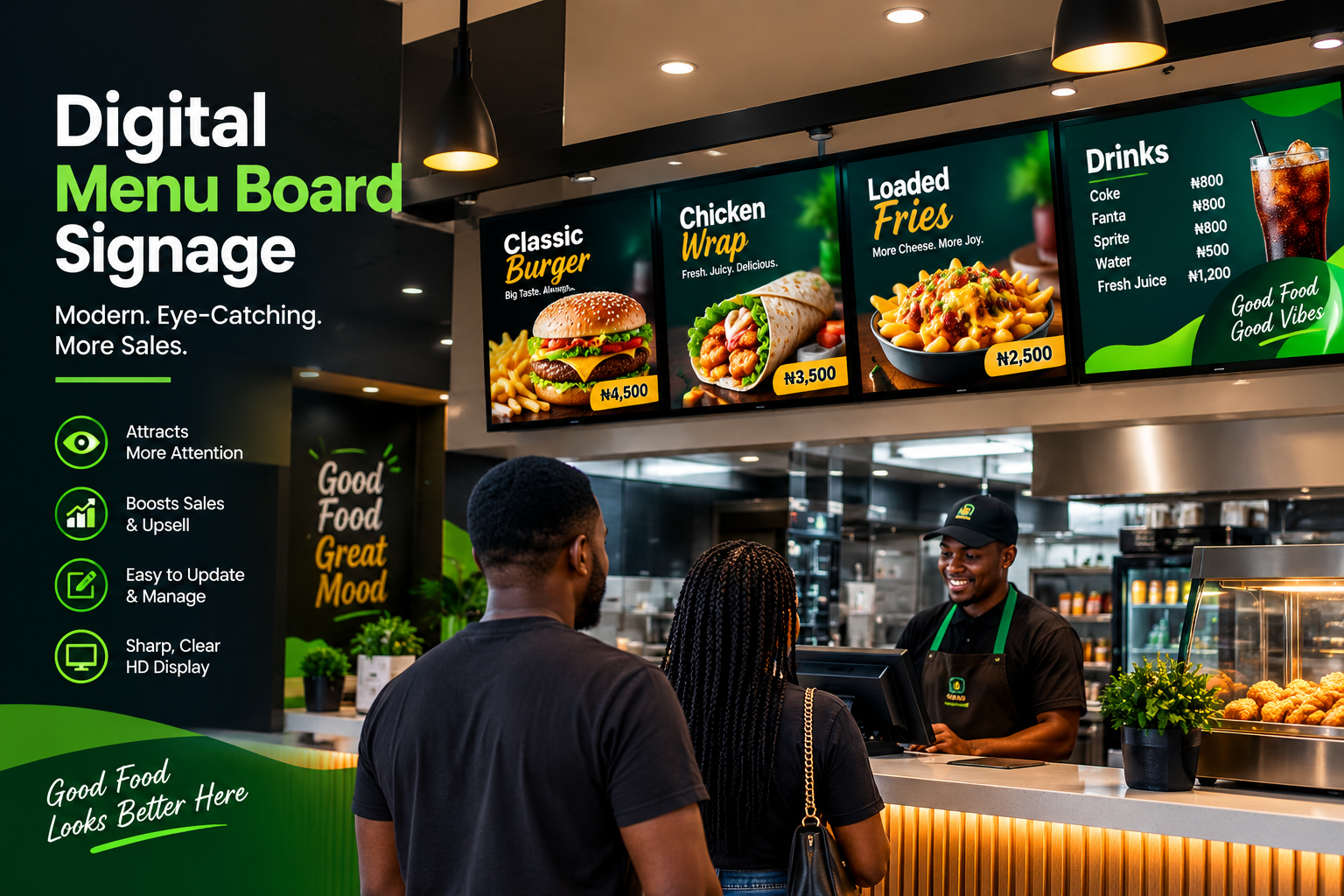
Promotional Content – Product highlights, discounts, seasonal offers, and new arrivals. This content should be visually bold and rotate frequently enough to stay fresh, especially in retail environments.
Educational Content – How-to tips, product usage guides, or industry insights that position your brand as knowledgeable and trustworthy.
Operational Content – Wait times, queue numbers, opening hours, weather updates, or live data feeds that add practical value for visitors.
Safety and Compliance Content – Especially important for industrial, construction, and healthcare settings, where clear instructions can genuinely protect lives.
Brand Storytelling Content – Short videos or testimonials that build emotional connection and reinforce brand identity.
A healthy content strategy typically blends these categories rather than relying on just one, since audiences quickly tune out screens that only ever show adverts.
One of the most underused digital signage tactics is dayparting — scheduling different content for different times of the day. A restaurant, for example, doesn’t need to show its dinner specials at 9 a.m., just as a bank branch doesn’t need to promote loan products during its busiest queue hours when customers are focused on being served quickly.
An effective schedule might include:
Morning content focused on welcome messages and daily specials
Midday content focused on promotions and upselling
Evening content focused on closing offers or next-day previews
Weekend content that differs entirely from weekday programming
Modern digital signage software makes this level of scheduling simple, allowing businesses to automate rotations weeks or months in advance while still leaving room for last-minute updates.
Content strategy isn’t only about what message to show — it’s also about how that message is presented. Screens are viewed differently from print materials or websites; viewers are usually walking, standing briefly, or glancing from a distance.
Keep these design principles in mind:
Simplicity first. One clear message per screen at a time performs better than cluttered layouts trying to say everything at once.
High contrast colors. Text should stand out clearly against the background, especially in bright retail environments or sunlit windows.
Legible fonts at a distance. Avoid thin or overly decorative fonts that become unreadable from a few meters away.
Motion with purpose. Subtle animation draws the eye, but excessive movement can feel distracting or unprofessional.
Consistent branding. Logos, colors, and tone should match your existing brand identity across all screens and locations.
A content strategy is never truly finished. The businesses that get the most value from digital signage treat it as a living system that improves over time through observation and adjustment.
Track simple indicators such as:
Which promotions led to noticeable increases in foot traffic or sales
How long staff or customers linger near a particular screen
Whether certain content categories are ignored altogether
Seasonal shifts that require new messaging (holidays, exam periods, rainy season, etc.)
Even informal feedback from front-line staff about what customers comment on can guide meaningful improvements to your content calendar.
Even well-intentioned businesses fall into a few common traps:
Letting content go stale. Screens showing the same message for months lose their power to capture attention.
Overloading the screen with text. If a message can’t be read in a glance, it needs to be simplified.
Ignoring audio-visual balance. Video with no captions can lose its message in noisy environments; audio that’s too loud can feel intrusive in quiet spaces like reception areas.
Forgetting maintenance. A dead pixel, frozen screen, or outdated promotion left running for weeks damages brand credibility more than having no screen at all.
No clear owner. Every screen network needs someone responsible for updating, scheduling, and reviewing content regularly.
A practical starting point for any business is a monthly content calendar that maps out:
Key dates and promotions for the month
Rotation schedule for each screen location
Responsible team member for updates
Review date to assess performance and refresh content
This doesn’t need to be complicated — even a simple spreadsheet shared across teams can dramatically improve consistency and results.
A digital signage content strategy is what separates a screen that quietly blends into the background from one that actively grows your business. By understanding your audience, mixing content types intentionally, scheduling with purpose, designing for readability, and reviewing performance regularly, your digital displays can become one of your most cost-effective marketing and communication tools.
Why SignFix Industrial Limited Is the Perfect Partner for Your Digital Signage Needs
Building a winning content strategy starts with the right hardware and expert guidance, and that’s where SignFix Industrial Limited comes in. With over a decade of experience delivering signage and branding solutions across Nigeria and beyond, SignFix combines high-quality digital display technology with hands-on consultation to help businesses design content strategies that actually convert. From installation and project management to ongoing maintenance support, our team ensures your digital signage investment keeps working for your brand long after the screens go live. Whether you’re outfitting a single reception area or a multi-location retail chain, SignFix delivers the reliability, craftsmanship, and local expertise Nigerian businesses trust.
Contact Us
📧 support@signfix.ng | info@signfix.ng
📞 Call Us: +234 903 336 6660




One Response
Great article! It highlights how crucial structured content strategy and dayparting are for maximizing digital signage effectiveness. Thanks for sharing!