

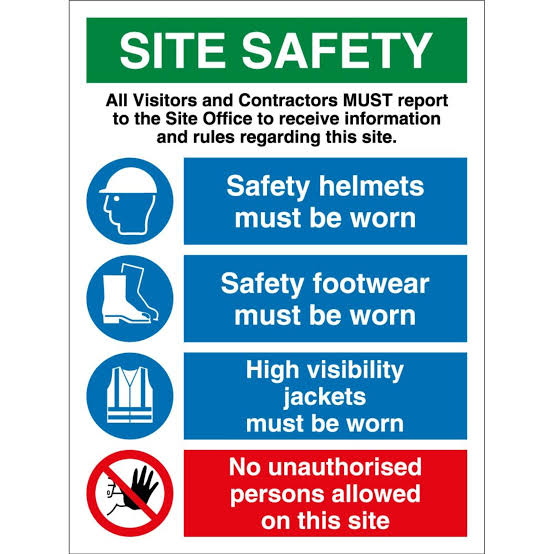
Construction sites are among the most dynamic and high-risk working environments in the world. Heavy machinery, elevated structures, electrical installations, moving vehicles, and constant human activity create a complex environment where safety and communication are absolutely critical.
In such environments, one missing instruction or unclear warning can lead to serious accidents, delays, or even fatalities.
This is why Construction Site Signage is not just a regulatory requirement, it is a lifesaving communication system.
Construction site signage provides clear visual instructions, warnings, directions, and safety information to workers, visitors, engineers, and contractors. It ensures that everyone on site understands the risks, follows safety procedures, and moves efficiently within the environment.
A well-designed signage system reduces accidents, improves workflow, enhances compliance, and creates a structured and safe working environment.
In this comprehensive guide, we will explore everything you need to know about construction site signage, including its importance, types, materials, regulations, design principles, implementation process, and future trends.
Construction site signage refers to a system of visual communication tools used on construction sites to provide safety warnings, instructions, directions, and regulatory information.
These signs are strategically placed across construction zones to ensure:
* Worker safety
* Visitor guidance
* Hazard awareness
* Compliance with safety regulations
* Efficient site coordination
They use standardized symbols, colors, and messages to communicate quickly and clearly in high-risk environments.
—
# **Importance of Construction Site Signage**
## **1. Prevents Accidents and Injuries**
Clear warnings help workers avoid hazardous areas and dangerous equipment.
## **2. Ensures Legal Compliance**
Most construction projects must follow occupational safety standards.
## **3. Improves Site Efficiency**
Workers and contractors move more efficiently with clear directions.
## **4. Protects Visitors and Inspectors**
Site visitors are guided safely through designated paths.
## **5. Reduces Liability Risks**
Proper signage reduces legal exposure in case of incidents.
—
# **Types of Construction Site Signage**
Construction signage is categorized based on function and safety purpose.
—
## **1. Warning Signs**
These alert workers to potential hazards.
Examples:
* Deep excavation zones
* Heavy machinery operation areas
* Electrical hazards
* Falling object risks
**Color:** Yellow with black symbols
—
## **2. Mandatory Signs**
These indicate required safety actions.
Examples:
* Wear safety helmets
* Wear reflective jackets
* Use protective gloves
* Safety boots required
**Color:** Blue background
—
## **3. Prohibition Signs**
These indicate forbidden actions.
Examples:
* No unauthorized entry
* No smoking
* No mobile phone use in restricted zones
* No entry without PPE
**Color:** Red circle with diagonal line
—
## **4. Emergency Signs**
These guide safe evacuation or emergency response.
Examples:
* Emergency exit routes
* First aid stations
* Fire assembly points
* Emergency contact points
**Color:** Green background
—
## **5. Informational Signs**
These provide general site information.
Examples:
* Site office directions
* Project name boards
* Contractor information
* Safety instructions
—
## **6. Directional Signs**
These guide movement within the site.
Examples:
* “← Site Office”
* “Heavy Equipment Area →”
* “Materials Storage Zone”
—
# **Regulations Governing Construction Site Signage**
Construction signage must comply with safety standards such as:
* ISO 7010 safety symbols
* OSHA construction safety guidelines
* ANSI Z535 standards
* Local building and construction safety regulations
These standards ensure consistency, clarity, and universal understanding across all construction environments.
—
# **Materials Used in Construction Site Signage**
Construction environments are harsh, so signage must be durable.
Common materials include:
* Aluminum composite panels
* Reflective vinyl
* PVC boards
* Stainless steel
* Heavy-duty plastic
* Weather-resistant laminated boards
* Photoluminescent materials
These materials withstand dust, rain, sunlight, and physical impact.
—
# **Design Principles of Effective Construction Signage**
## **1. Clarity**
Messages must be simple and instantly understandable.
## **2. Visibility**
Signs must be visible from a safe distance.
## **3. Durability**
Must withstand harsh construction environments.
## **4. Standardization**
Use universally recognized symbols.
## **5. Strategic Placement**
Place signs at entry points and hazard zones.
## **6. High Contrast**
Ensure readability in all lighting conditions.
—
# **Common Mistakes in Construction Site Signage**
## **1. Missing Safety Signs**
Lack of signage increases accident risk.
## **2. Poor Placement**
Signs hidden behind equipment or materials are ineffective.
## **3. Faded or Damaged Signs**
Reduces visibility and safety compliance.
## **4. Inconsistent Messaging**
Mixed symbols create confusion.
## **5. Overcrowding Signs**
Too many signs reduce attention and clarity.
—
# **Psychology Behind Construction Site Signage**
Construction signage relies on rapid visual communication.
Key psychological principles include:
* Color triggers instant hazard recognition
* Symbols bypass language barriers
* Repetition improves safety awareness
* Visual warnings reduce reaction time
* Placement influences worker behavior
The brain processes visual danger signals faster than written instructions, making signage essential for safety.
—
# **Where Construction Site Signage is Used**
## **1. Building Construction Sites**
For structural safety and worker coordination.
## **2. Road Construction Projects**
For traffic control and pedestrian safety.
## **3. Industrial Construction Sites**
For heavy machinery and equipment safety.
## **4. Infrastructure Projects**
Bridges, railways, and public utilities.
## **5. Residential Construction**
For contractor and visitor safety.
—
# **Benefits of Construction Site Signage**
* Reduced workplace accidents
* Improved safety compliance
* Better site organization
* Faster project execution
* Increased worker awareness
* Lower insurance and liability risks
—
# **Digital Transformation in Construction Signage**
Modern construction sites are integrating digital safety systems.
## **1. Digital Safety Boards**
Display real-time safety updates.
## **2. Smart Sensors**
Detect hazards and trigger alerts.
## **3. QR Code Safety Instructions**
Workers scan for safety procedures.
## **4. Mobile Safety Alerts**
Instant notifications for site risks.
## **5. AI-Based Monitoring Systems**
Predict and prevent safety violations.
—
# **Step-by-Step Implementation Process**
## **Step 1: Site Risk Assessment**
Identify all hazards present on site.
## **Step 2: Safety Planning**
Determine required signage types.
## **Step 3: Site Mapping**
Identify key locations for signage placement.
## **Step 4: Design Development**
Create standardized signage layouts.
## **Step 5: Material Selection**
Choose weather-resistant materials.
## **Step 6: Production**
Manufacture high-quality signage.
## **Step 7: Installation**
Place signage at strategic points.
## **Step 8: Maintenance**
Regular inspection and replacement.
—
# **Applications of Construction Site Signage**
## **Safety Management**
Protect workers and visitors from hazards.
## **Site Coordination**
Improve movement and workflow.
## **Regulatory Compliance**
Meet legal safety requirements.
## **Emergency Response**
Guide evacuation procedures.
## **Project Efficiency**
Reduce downtime and confusion.
—
# **Future Trends in Construction Site Signage**
## **1. Smart Construction Sites**
Fully connected safety ecosystems.
## **2. AI Hazard Detection**
Automated safety warning systems.
## **3. Wearable Safety Integration**
Helmets and vests linked to signage alerts.
## **4. Digital Twin Construction Sites**
Virtual safety simulations.
## **5. Eco-Friendly Materials**
Sustainable signage production.
When it comes to construction site signage, durability, visibility, and compliance are non-negotiable.
SignFix Industrial Limited is a trusted leader in delivering high-performance construction signage solutions designed for maximum safety and durability in harsh environments.
Here’s why SignFix Industrial Limited stands out:
* **Expertise in construction and industrial safety signage systems**
* **Compliance with international safety standards (ISO, OSHA principles)**
* **Use of weather-resistant and heavy-duty materials**
* **Custom signage solutions tailored to each project site**
* **High-precision manufacturing for clarity and visibility**
* **End-to-end service from design to installation**
* **Proven experience across construction and infrastructure projects**
Choosing SignFix Industrial Limited means choosing safety, professionalism, and reliability on every construction site.
—
# **Conclusion**
Construction site signage is a critical part of every building project. It protects lives, improves efficiency, ensures compliance, and keeps operations running smoothly.
Without clear signage, construction s
ites become dangerous and disorganized. With it, they become safe, structured, and highly efficient environments.
As construction projects continue to grow in scale and complexity, the importance of professional signage systems will only increase.
Investing in high-quality construction signage is not optional—it is essential for safety, compliance, and success.
Contact Us at support@signfix.ng or info@signfix.ng or Call Us +234 903 336 6660