
Productivity is the backbone of every successful business. Whether you manage a corporate office, a manufacturing facility, a hospital, a school, a retail outlet, or a financial institution, the ability of employees to perform efficiently directly affects profitability, customer satisfaction, and long-term growth.
Many organizations invest heavily in technology, employee training, ergonomic furniture, and workflow optimization. While these investments are valuable, one important factor is often overlooked—professional workplace signage.
Signage is far more than displaying a company logo or identifying office doors. It is a powerful communication tool that influences how employees move, interact, make decisions, and perform their daily responsibilities. Well-designed workplace signage minimizes confusion, reduces wasted time, strengthens company culture, improves safety, and creates an environment where employees can focus on doing their best work.
Businesses that use signage strategically experience smoother operations because information is communicated visually and instantly. Employees spend less time asking for directions, searching for departments, locating equipment, or identifying restricted areas. Visitors also enjoy a more organized experience, reducing interruptions to staff members.
As organizations continue to compete in today’s fast-changing business environment, every minute counts. Improving workplace productivity is no longer just about working harder—it is about designing smarter workplaces where visual communication supports efficiency.
In this comprehensive guide, we explore how professional workplace signage can transform productivity, improve employee experiences, and contribute to long-term business success.
Workplace productivity refers to how effectively employees complete their assigned tasks within available time and resources. Highly productive workplaces are characterized by:
– Clear communication
– Efficient movement
– Organized workspaces
– Safe environments
– Strong employee morale
– Reduced operational delays
– Consistent branding
– Professional appearance
While managers often focus on training and supervision, the physical workplace itself significantly influences productivity. Every unnecessary interruption, wrong turn, repeated question, or unclear instruction reduces efficiency.
Professional signage eliminates many of these hidden productivity killers.
The human brain processes visual information much faster than written paragraphs or verbal instructions. Employees naturally respond more quickly to symbols, icons, directional arrows, colors, and clearly designed signs.
Consider a visitor entering a large corporate office.
Without directional signage, the visitor may:
– Stop several employees for directions.
– Wander through departments.
– Interrupt ongoing meetings.
– Arrive late for appointments.
Now imagine the same office with clear reception signs, directional arrows, department identifiers, and floor directories.
The visitor reaches the destination independently while employees continue focusing on their responsibilities.
This simple example demonstrates how signage improves productivity by reducing unnecessary interruptions.
Many businesses underestimate how much time employees lose because of ineffective signage.
Common problems include:
Employees Frequently Asking Questions
Questions like:
– Where is Human Resources?
– Which office handles payments?
– Where is the conference room?
– Which department receives deliveries?
– Where are the restrooms?
may seem insignificant individually, but when repeated dozens of times every day, they consume valuable working hours.
Professional signage answers these questions before they are asked.
Large office complexes often contain multiple departments spread across different floors.
Without effective wayfinding signs:
– Employees become lost.
– New hires require constant assistance.
– Visitors interrupt workers.
– Deliveries are delayed.
Clear directional signs dramatically reduce navigation time.
Every interruption forces employees to mentally shift attention.
Research consistently shows that regaining concentration after interruptions takes time.
Proper signage minimizes unnecessary disruptions by allowing people to find information independently.
1. Improves Navigation
Directional signs help employees move quickly throughout buildings.
Examples include:
– Department signs
– Floor directories
– Stairway identification
– Elevator directories
– Exit signs
– Meeting room signs
Employees spend less time searching and more time working.
2. Reduces Communication Delays
Signs communicate instantly.
Instead of repeatedly reminding staff about procedures, organizations can display professional visual reminders.
Examples include:
– Visitor check-in procedures
– Safety instructions
– Equipment usage
– Meeting schedules
– Workspace policies
Visual reminders reinforce important information without requiring constant supervision.
3. Strengthens Workplace Organization
An organized workplace naturally supports productivity.
Signage identifies:
– Storage rooms
– Filing areas
– Equipment stations
– Departments
– Production zones
– Inventory locations
Employees locate resources faster, reducing unnecessary downtime.
4. Enhances Workplace Safety
Unsafe workplaces experience interruptions caused by accidents, investigations, equipment damage, and lost working hours.
Safety signage reminds employees about:
– Protective equipment
– Hazardous materials
– Emergency exits
– Fire extinguishers
– Restricted access
– First aid stations
A safer workplace keeps operations running efficiently while protecting employees.
Productivity is not only about systems and processes.
Employee motivation also plays a critical role.
Professionally branded workplaces create an atmosphere that inspires confidence and pride.
Wall graphics displaying:
– Company values
– Mission statements
– Achievement milestones
– Team accomplishments
– Motivational quotes
can reinforce organizational culture and encourage employees to remain engaged.
When employees feel connected to their workplace, they often demonstrate stronger commitment, higher morale, and greater productivity.
Modern workplaces depend heavily on teamwork.
Clear signage helps teams collaborate by identifying:
– Collaboration zones
– Quiet workspaces
– Brainstorming rooms
– Meeting areas
– Training facilities
Employees immediately understand how different spaces are intended to be used, reducing confusion and improving workflow.
Starting a new job can be overwhelming.
New employees must quickly learn:
– Office layout
– Department locations
– Meeting rooms
– Emergency exits
– Restrooms
– Cafeteria
– Reception
– Management offices
Professional signage shortens the learning curve by helping new staff navigate independently from their very first day.
This allows supervisors and colleagues to spend less time giving directions and more time on meaningful training and collaboration.
Consistency plays a crucial role in effective workplace communication.
Using uniform colors, fonts, symbols, and branding across all office signs creates familiarity and reduces confusion.
Employees instinctively recognize the purpose of signs when they follow a consistent visual system. Over time, this improves navigation speed, enhances professionalism, and reinforces the company’s brand identity.
Organizations should avoid mixing different styles, colors, or formats without a clear purpose, as inconsistent signage can lead to uncertainty and diminish the overall workplace experience.
One of the biggest advantages of investing in workplace signage is that its impact can be measured. Unlike some business improvements that are difficult to quantify, effective signage often produces visible changes in workplace efficiency, employee behaviour, and customer satisfaction.
Business owners and facility managers can evaluate the effectiveness of their signage by monitoring key performance indicators such as:
Reduced time spent giving directions to visitors.
Faster onboarding of new employees.
Improved workplace safety records.
Increased employee satisfaction.
Fewer workflow interruptions.
Better visitor experiences.
Improved departmental coordination.
For example, if reception staff previously spent several hours each week directing visitors to different departments, professionally installed wayfinding signage can significantly reduce these interruptions. This allows employees to dedicate more time to their primary responsibilities, leading to improved productivity across the organization.
Similarly, safety signage can contribute to fewer workplace incidents, reducing downtime, compensation costs, and operational disruptions. Over time, these improvements create measurable financial and operational benefits.
Even the best intentions can fail if workplace signage is poorly planned or executed. To maximize productivity, businesses should avoid these common mistakes.
Using Too Much Text
Employees and visitors rarely stop to read lengthy paragraphs on a sign. Information should be concise, easy to understand, and supported with universally recognized symbols where appropriate.
For example, instead of displaying a long paragraph explaining emergency procedures, use clear icons, directional arrows, and short instructions that can be understood at a glance.
Poor Placement
A beautifully designed sign loses its value if it cannot be seen. Signs should be installed at eye level and positioned where people naturally expect to find information.
Reception directories belong near entrances, safety signs should be located close to potential hazards, and directional signs should appear before decision points—not after someone has already taken the wrong turn.
Inconsistent Branding
A workplace with different fonts, colours, materials, and design styles across its signage may appear disorganized. Consistency reinforces professionalism and strengthens brand identity.
Every sign should align with your company’s visual branding, ensuring employees and visitors immediately recognize official communication.
Neglecting Maintenance
Damaged, faded, or outdated signage sends the wrong message about a business. Regular inspections help identify signs that require cleaning, repair, or replacement.
Maintaining signage demonstrates professionalism and ensures that information remains accurate and easy to read.
Not every workplace requires the same type of signage. The ideal solution depends on your industry, office layout, workforce size, and operational objectives.
Some of the most effective workplace signage includes:
Directional Signs
These guide employees, visitors, and suppliers through your premises efficiently. Directional signage reduces confusion and minimizes unnecessary interruptions.
Department Identification Signs
Clearly labelled departments make navigation simple and create a more organized work environment.
Safety Signage
Safety signs communicate hazards, emergency procedures, mandatory protective equipment, and evacuation routes. They play a vital role in ensuring compliance with workplace safety regulations.
Wall Graphics
Inspirational quotes, company values, mission statements, and branded graphics help reinforce organizational culture while creating an engaging workspace.
Reception Signage
A professionally designed reception sign creates a positive first impression and immediately communicates credibility and professionalism.
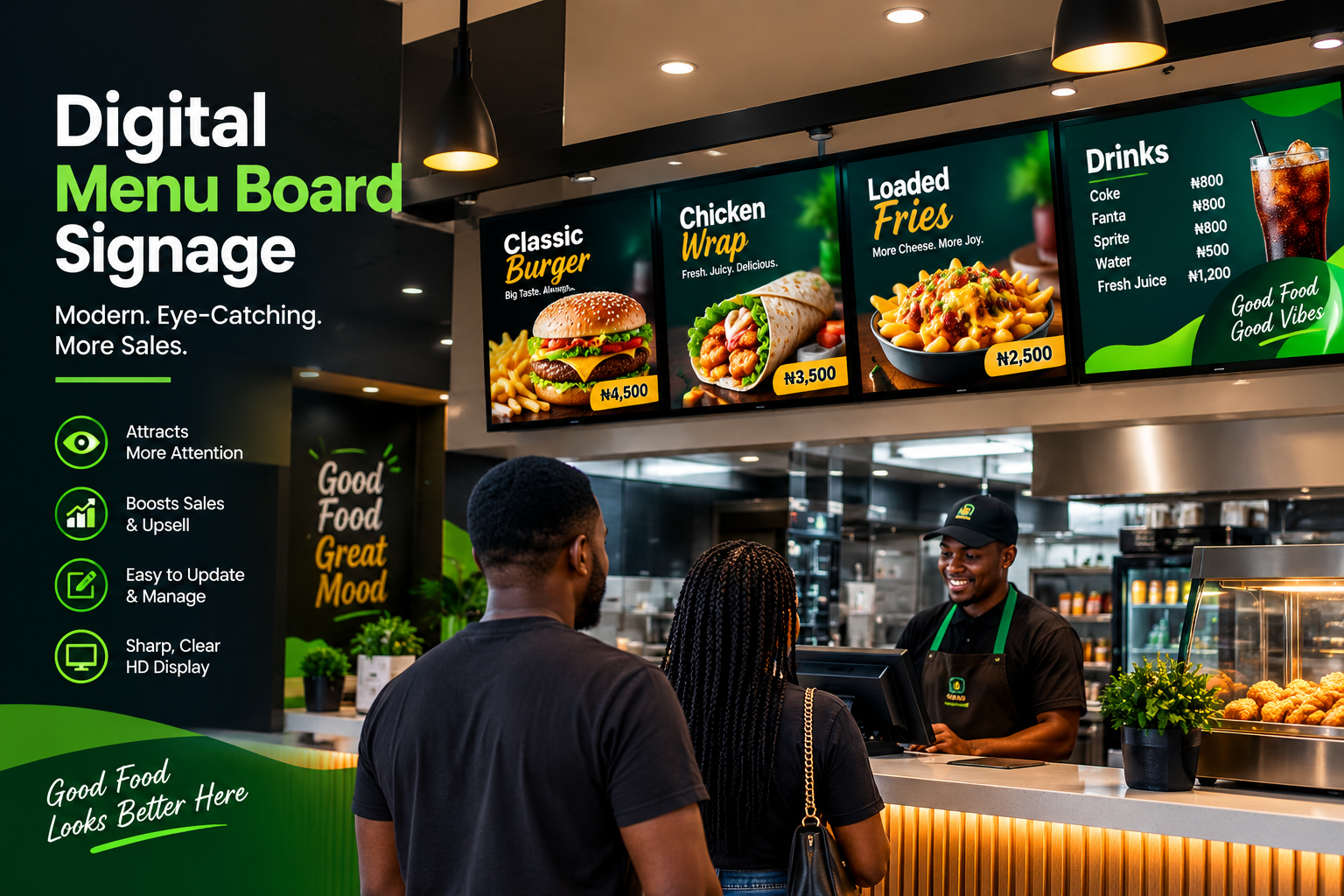
Digital Signage
Modern workplaces increasingly use digital displays to communicate announcements, performance dashboards, company news, visitor information, and event schedules. Unlike traditional signs, digital displays can be updated instantly, making them a flexible communication tool.
Technology continues to reshape how businesses communicate within their work environments. Modern workplace signage is becoming smarter, more interactive, and increasingly integrated with digital systems.
Emerging trends include:
Interactive digital directories
Touchscreen information kiosks
LED information boards
QR code-enabled signs
Smart meeting room displays
Digital visitor management systems
Energy-efficient illuminated signage
AI-powered content management for digital displays
These innovations help businesses communicate more effectively while supporting flexible work environments and hybrid office models.
As organizations continue embracing digital transformation, workplace signage will play an even greater role in improving operational efficiency, enhancing employee experiences, and strengthening organizational culture.
Some businesses mistakenly view signage as a one-time expense rather than a strategic investment. In reality, high-quality workplace signage continues to deliver value long after installation.
Professionally designed signage can:
Reduce operational inefficiencies.
Improve employee confidence.
Strengthen workplace culture.
Increase visitor satisfaction.
Reinforce brand identity.
Support regulatory compliance.
Enhance overall business professionalism.
Unlike many short-term business investments, quality signage provides benefits for years with minimal maintenance.
Organizations that invest in effective visual communication often experience smoother daily operations, stronger employee engagement, and a more professional corporate image.
Frequently Asked Questions (FAQs)
1. How does workplace signage improve employee productivity?
Workplace signage improves productivity by providing clear visual communication. Employees spend less time searching for departments, equipment, or meeting rooms and more time focusing on their responsibilities. Effective signage also minimizes interruptions, improves workflow, and creates a more organized work environment.
2. What types of workplace signage are most effective?
The most effective workplace signage includes:
– Directional and wayfinding signs
– Department identification signs
– Safety and compliance signage
– Reception and lobby signs
– Wall graphics and motivational displays
– Digital information displays
– Meeting room and office identification signs
The right combination depends on your business type, office layout, and communication needs.
3. Can small businesses benefit from workplace signage?
Absolutely. Workplace signage is valuable for businesses of all sizes. Even a small office can improve efficiency, professionalism, and customer experience with well-designed reception signs, directional signs, branded wall graphics, and safety signage.
4. How often should workplace signage be updated?
Businesses should review their signage whenever there are changes to office layouts, departments, branding, safety regulations, or business operations. Regular inspections also help identify signs that need cleaning, repairs, or replacement.
5. Is digital signage better than traditional signage?
Both have their advantages. Traditional signage is ideal for permanent information such as office identification and safety notices, while digital signage is best for frequently changing content, announcements, promotions, and real-time communication. Many organizations achieve the best results by combining both solutions.
A productive workplace is built on more than skilled employees and efficient technology—it also depends on effective communication. Professional workplace signage provides that communication by helping employees, visitors, and customers navigate spaces easily, understand important information, and interact confidently within the workplace.
From improving navigation and strengthening workplace safety to supporting employee engagement and reinforcing company branding, signage has a direct impact on operational efficiency. It reduces unnecessary interruptions, creates a more organized environment, and contributes to a positive workplace culture where employees can perform at their best.
As businesses continue to evolve, investing in high-quality workplace signage is no longer a luxury but a strategic decision. Whether you operate a corporate office, manufacturing facility, healthcare center, educational institution, retail outlet, or hospitality business, the right signage can transform the way your organization communicates and operates.
By implementing a well-planned signage strategy, you are not only enhancing the appearance of your workplace—you are creating an environment that encourages productivity, professionalism, collaboration, and long-term business success.
When it comes to delivering innovative and high-quality signage solutions, SignFix Industrial Limited stands out as a trusted partner for businesses across Nigeria. We understand that signage is more than just displaying information—it’s about creating meaningful experiences, strengthening brand identity, and improving how people interact with your business.
Our experienced team specializes in designing, manufacturing, and installing premium signage solutions that combine functionality, durability, and visual appeal. Every project is carefully tailored to meet the unique needs of our clients, ensuring that each sign supports their business goals and leaves a lasting impression.
Our services include:
– Corporate office signage
– Wayfinding and directional signage
– Safety and compliance signage
– Digital signage solutions
– Reception and lobby branding
– Wall graphics and office branding
– Vehicle branding
– Outdoor and illuminated signage
– Custom signage fabrication and installation
At SignFix Industrial Limited, we pride ourselves on:
– Exceptional craftsmanship
– Premium-quality materials
– Innovative and creative designs
– Timely project delivery
– Professional installation
– Outstanding customer support
– Tailored solutions for businesses of every size



How to Design Promotions Customers Can’t Ignore End-of-year sales are

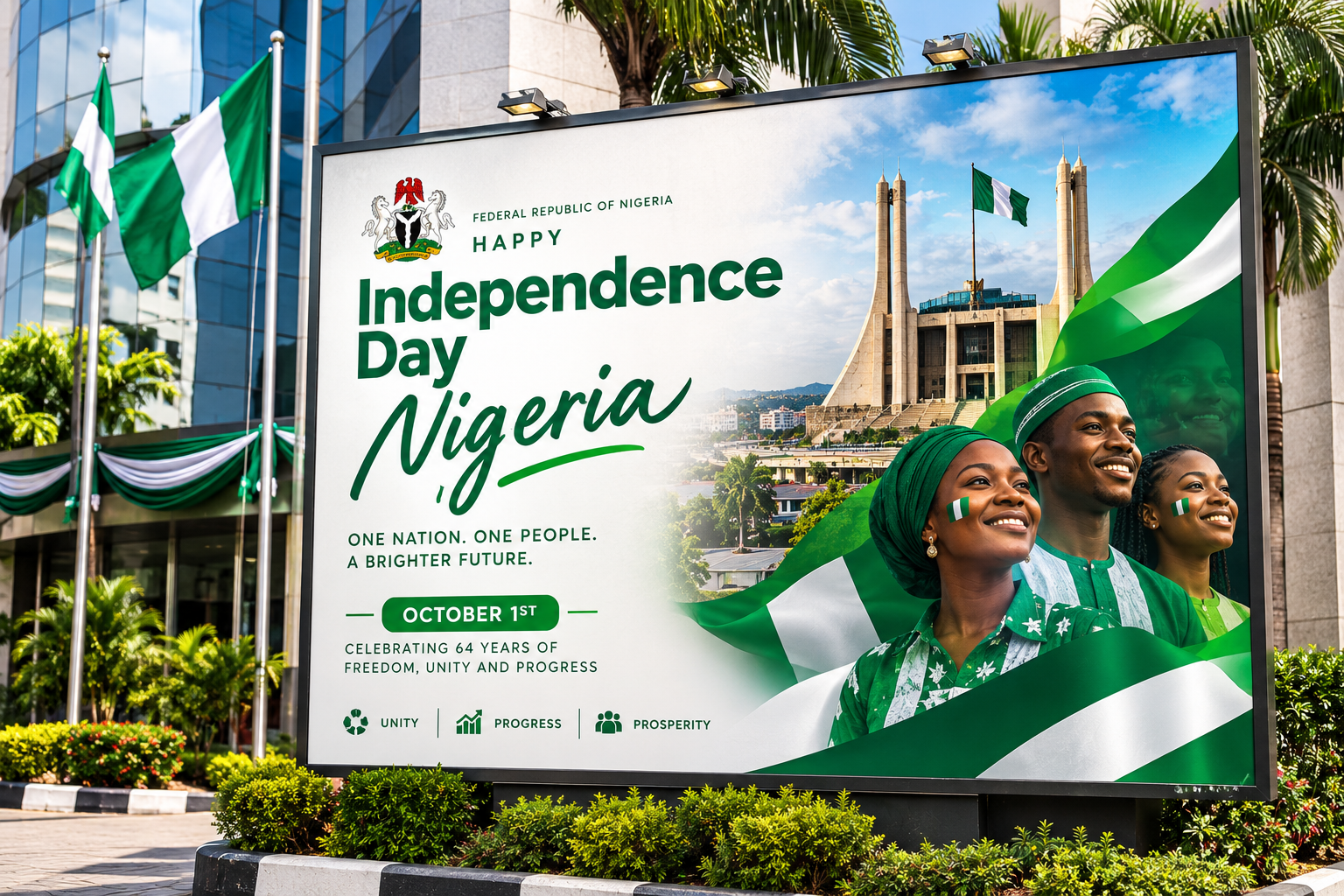
Every year, as October 1st approaches, Nigeria comes alive in