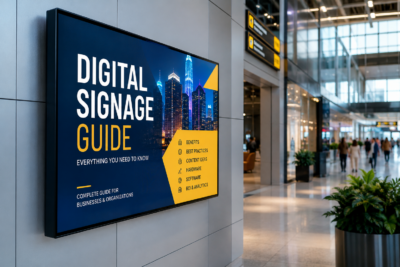

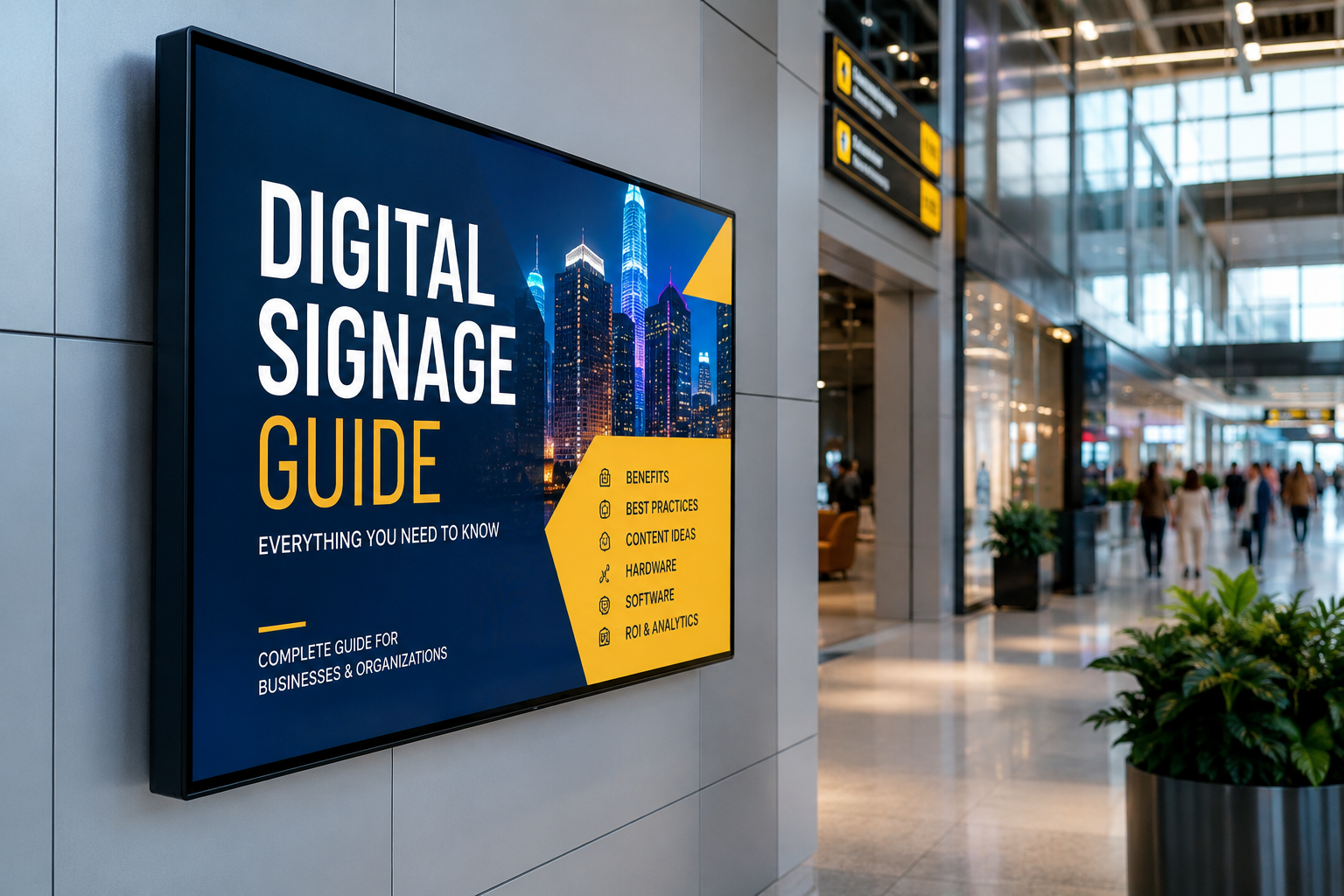
Businesses today operate in an increasingly competitive environment where capturing customer attention is more challenging than ever. Consumers are constantly surrounded by advertisements, promotional messages, and digital content. As a result, traditional printed signage alone may not always be enough to communicate effectively with modern audiences.
This is where digital signage has become a game changer.
Digital signage combines technology, creativity, and marketing to deliver dynamic visual content through electronic display screens. Unlike static signs that display the same information for months or years, digital signage allows businesses to update messages instantly, display videos and animations, promote multiple products, and communicate with customers in real time.
Whether you own a retail store, restaurant, bank, hospital, educational institution, hotel, corporate office, or shopping mall, digital signage provides an innovative way to improve customer experience while strengthening your brand image.
As customer expectations continue to evolve, businesses that embrace digital signage gain a competitive advantage by delivering engaging, timely, and visually appealing information. From displaying promotional offers to guiding visitors through large buildings, digital signage has become an essential business communication tool.
This guide explores everything you need to know about digital signage, including its benefits, applications, and how to choose the right solution for your organization.
Digital signage refers to the use of electronic screens to display multimedia content such as images, videos, animations, announcements, advertisements, menus, schedules, and live information.
Unlike conventional printed signs, digital displays can be updated remotely within minutes, allowing businesses to respond quickly to changing information or promotional campaigns.
A complete digital signage system generally consists of:
– High-quality display screens
– Media player
– Content management software
– Internet or local network connection
– Professionally designed digital content
These components work together to create an engaging communication platform capable of displaying different types of information throughout the day.
For example, a restaurant can display breakfast menus in the morning, lunch promotions in the afternoon, and dinner specials in the evening without replacing a single printed sign.
Similarly, a corporate office can display company announcements, meeting schedules, employee recognition messages, safety reminders, and visitor information using one digital screen.
The popularity of digital signage continues to grow because it offers benefits that traditional signage cannot easily provide.
1. Instant Content Updates
One of the biggest advantages of digital signage is flexibility.
Businesses no longer need to print new banners or posters whenever prices change or promotions are updated.
Instead, content can be changed within minutes across multiple locations.
This saves both time and printing costs while ensuring customers always receive accurate information.
2. Greater Customer Engagement
Moving images naturally attract more attention than static graphics.
Videos, animations, product demonstrations, countdown timers, and interactive displays capture customer interest much faster than traditional printed signs.
This increased engagement often results in longer viewing times and improved brand recall.
3. Improved Brand Image
Modern digital displays create a professional appearance that reflects innovation and quality.
Customers are more likely to trust businesses that invest in advanced communication technologies because they associate them with professionalism and excellent service.
Digital signage also allows organizations to maintain consistent branding through colours, logos, typography, and visual themes.
4. Cost Efficiency Over Time
Although digital signage requires an initial investment, it often becomes more cost-effective in the long run.
Businesses save money by reducing repeated printing expenses, installation costs, and material waste associated with frequently changing promotional materials.
Over time, the ability to update content instantly contributes to a higher return on investment.
5. Better Customer Experience
Customers appreciate receiving clear, timely, and engaging information.
Digital displays can provide:
– Product information
– Queue updates
– Event schedules
– Directions
– Promotions
– Safety announcements
– Company news
– Weather updates
– Social media feeds
Providing relevant information at the right time improves customer satisfaction and enhances the overall experience.
Different businesses require different digital signage solutions depending on their objectives and operating environments.
Indoor Digital Signage
Indoor displays are commonly used in:
– Corporate offices
– Banks
– Hospitals
– Hotels
– Shopping malls
– Educational institutions
– Restaurants
– Retail stores
These displays communicate information, advertise products, and improve visitor navigation.
Outdoor digital signage is specifically designed to withstand harsh weather conditions.
Examples include:
– LED billboards
– Fuel station displays
– Shopping mall displays
– Building-mounted advertising screens
– Roadside digital advertisements
Outdoor displays feature high brightness levels to remain visible even under direct sunlight.
Interactive Digital Signage
Interactive displays allow customers to engage directly with on-screen content.
Common examples include:
– Self-service kiosks
– Digital directories
– Product catalogues
– Ticketing systems
– Information terminals
Interactive solutions reduce waiting times while improving customer convenience.
Digital Menu Boards
Restaurants, cafés, bakeries, and fast-food outlets increasingly use digital menu boards to display pricing, meal images, promotional offers, and seasonal specials.
Updating menu items becomes quick and effortless without replacing printed materials.
Video Walls
Video walls combine multiple display screens to create one large visual display.
They are commonly installed in:
– Corporate headquarters
– Conference centres
– Airports
– Control rooms
– Exhibition centres
– Luxury retail stores
Video walls deliver stunning visuals that leave lasting impressions on customers and visitors.
Digital signage serves virtually every industry.
Retail businesses use it to promote products and increase impulse purchases.
Hospitals display patient information, health awareness messages, and directional guidance.
Banks communicate financial products, queue information, and customer announcements.
Schools and universities use digital displays for notices, event schedules, and emergency communications.
Hotels showcase services, welcome guests, advertise events, and improve navigation throughout their facilities.
Corporate organizations strengthen internal communication by displaying company news, employee achievements, safety reminders, and performance dashboards.
Regardless of industry, digital signage improves communication while enhancing brand professionalism.
Investing in digital signage goes beyond purchasing a display screen. To achieve the best results, businesses need a complete solution that combines quality hardware, reliable software, engaging content, and professional installation. A well-designed digital signage system not only attracts attention but also delivers information clearly and consistently.
High-Quality Display
The display is the most visible component of any digital signage system. A high-resolution screen with excellent brightness and color accuracy ensures that content remains clear and attractive, whether installed indoors or outdoors.
For outdoor installations, displays should be weather-resistant and bright enough to remain visible even under direct sunlight. Indoor displays, on the other hand, should provide sharp visuals without causing glare or eye strain.
Easy Content Management
One of the greatest strengths of digital signage is the ability to update content quickly. A reliable content management system (CMS) enables businesses to schedule advertisements, upload promotional campaigns, change pricing, or display announcements from a central location.
For organizations with multiple branches, centralized content management ensures brand consistency across all locations while reducing administrative effort.
Professional Content Design
Technology alone does not guarantee success. The effectiveness of digital signage depends largely on the quality of the content displayed.
Successful digital signage content is:
Visually appealing
Easy to read
Concise and informative
Consistent with the company’s brand identity
Updated regularly
Using high-quality graphics, professional animations, and clear typography enhances customer engagement and reinforces a positive brand image.
Strategic Placement
Even the most advanced digital display will have little impact if placed in the wrong location. Businesses should install digital signage where it naturally attracts attention, such as:
Building entrances
Reception areas
Retail aisles
Waiting rooms
Hotel lobbies
Shopping malls
Conference rooms
Restaurant ordering points
Proper placement maximizes visibility and ensures that important messages reach the intended audience.
Selecting the right digital signage solution requires careful planning. Every business has unique goals, audiences, and operating environments.
Define Your Objectives
Ask yourself:
Do you want to increase sales?
Improve customer communication?
Enhance internal communication?
Promote new products?
Reduce perceived waiting times?
Strengthen your brand image?
Clearly defining your objectives helps determine the most suitable digital signage solution.
Understand Your Audience
The type of content displayed should match the needs and interests of your target audience.
For example:
Retail customers respond well to promotional offers and product demonstrations.
Corporate employees benefit from company announcements and performance updates.
Hospital visitors need clear directions and health information.
Restaurant customers appreciate visually appealing digital menus.
Knowing your audience ensures your content remains relevant and engaging.
Choose the Right Screen Size
Screen size should correspond with viewing distance and installation location. Large open spaces may require bigger displays or video walls, while smaller offices can effectively use compact screens.
Professional signage experts can help determine the ideal display size for your environment.
Consider Future Expansion
As your business grows, your signage needs may change. Investing in scalable digital signage solutions allows you to add more screens or locations without replacing your entire system.
Despite its many advantages, digital signage may fail to deliver results if not implemented correctly.
Displaying Too Much Information
One common mistake is overcrowding the screen with excessive text. Customers typically spend only a few seconds viewing a display, so messages should be short, clear, and visually engaging.
Ignoring Content Updates
Outdated promotions, expired offers, or old announcements can damage your brand’s credibility. Businesses should regularly review and refresh content to keep displays relevant.
Poor Display Placement
Installing screens where they are blocked by furniture, pillars, or heavy foot traffic significantly reduces effectiveness. Visibility should always be a top priority.
Inconsistent Branding
Using different fonts, colors, or design styles across multiple displays creates confusion and weakens brand identity. Consistency builds recognition and professionalism.
Neglecting Maintenance
Regular maintenance ensures displays continue operating at peak performance. Cleaning screens, updating software, and inspecting hardware can prevent unexpected downtime.
Digital signage technology continues to evolve, creating exciting opportunities for businesses.
Some emerging trends include:
Artificial Intelligence (AI) for personalized content
Interactive touch-screen experiences
Cloud-based content management
Real-time data integration
Smart analytics to measure customer engagement
Voice-controlled digital kiosks
Integration with social media platforms
Businesses that embrace these innovations will remain competitive while delivering more engaging customer experiences.
Frequently Asked Questions
Is digital signage suitable for small businesses?
Yes. Digital signage is scalable and can benefit businesses of all sizes. Small businesses can start with a single display and expand as needed.
Is digital signage expensive?
While the initial investment may be higher than traditional signage, digital signage often reduces long-term costs by eliminating frequent printing and installation expenses.
How often should digital content be updated?
Businesses should update content whenever promotions, pricing, events, or announcements change. Regular updates keep displays fresh and engaging.
Can digital signage be used indoors and outdoors?
Absolutely. Indoor and outdoor displays are designed differently to suit their environments. Outdoor displays are built to withstand weather conditions and provide higher brightness levels.
Digital signage has transformed the way businesses communicate with customers, employees, and visitors. It offers flexibility, improves customer engagement, strengthens brand image, and provides a cost-effective communication solution for organizations across various industries.
Whether you operate a retail store, corporate office, healthcare facility, educational institution, hospitality business, or financial organization, investing in professional digital signage can enhance the customer experience while supporting business growth.
Choosing the right digital signage solution requires more than selecting a screen—it involves careful planning, quality installation, compelling content, and ongoing support. When implemented strategically, digital signage becomes a powerful tool that drives engagement, improves communication, and delivers measurable business value.
At SignFix Industrial Limited, we understand that effective signage is more than just a display—it is a powerful business asset. Our team combines creativity, technical expertise, and industry experience to deliver innovative signage solutions tailored to your business needs.
From digital signage and LED displays to corporate branding, wayfinding systems, safety signage, vehicle branding, and custom fabrication, we provide end-to-end solutions that help businesses stand out and communicate effectively.
We are committed to:
High-quality craftsmanship
Innovative design solutions
Durable and premium materials
Professional installation
Timely project delivery
Excellent customer support
Customized signage solutions for businesses of all sizes
Whether you’re launching a new business, upgrading your existing signage, or implementing a complete branding strategy, SignFix Industrial Limited is your trusted partner for delivering exceptional results.
Ready to transform your business with professional signage solutions? Our team is here to help you choose the right signage for your brand and ensure every project is executed to the highest standard.
Contact Us at support@signfix.ng or info@signfix.ng or Call Us +234 903 336 6660


Businesses today operate in an increasingly competitive environment where capturing
Schools are dynamic environments filled with students, teachers, administrators, parents,
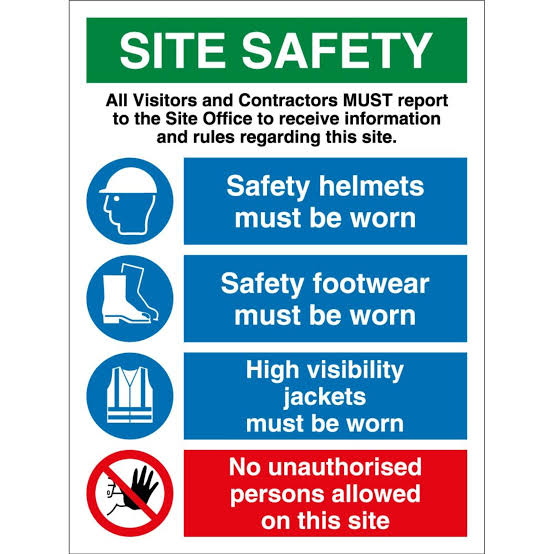
Construction sites are among the most dynamic and high-risk working
The reception area is the first physical touchpoint between a